
This HJC i80 Velly review delivers real-world insights from extensive testing and rider feedback across varied adventure conditions.
I spent months analyzing this modular helmet’s performance on highway stretches, trail adventures, and daily commutes.
This review examines every aspect from shell construction and ventilation performance to peak visor behavior and sun shield limitations.
But will this HJC i80 Velly review help you decide if this modular helmet matches your adventure riding needs?
Our Final i80 Verdict
I’ve assembled a comprehensive review of the HJC i80 Velly, diving deep into everything from the advanced polycarbonate shell construction to real-world off-road riding performance. But I understand – sometimes you need the key points without the full deep dive.
Click the tabs below for a quick summary covering what works well with this modular helmet and the drawbacks I’ve discovered during testing.
You’ll also find a video review where I put this adventure helmet through varied riding conditions to see how it performs beyond the spec sheet.


This format works perfect for riders in a hurry or those wanting to gauge whether this budget-friendly flip-front design deserves a spot in your gear collection.
Want to jump straight to a specific topic? Use the table of contents menu to navigate directly to sections like ventilation, safety ratings, peak visor performance, or any other aspect that matters most for your riding style.
Likes- In Detail
HJC i80 Velly is praised for comfort first, everything else second. Riders slip it on, feel the 3D cheek pads hug their jaw, and notice the intermediate-oval fit leaves no hotspots even after a day of ADV touring.
The advanced channeling ventilation system sweeps heat out through back airflow ports, keeping the Pinlock-ready visor clear when humidity spikes.
Street prices stay friendly, yet the polycarbonate shell, modular latch, and wind-tunnel-tested peak land with the thunk and click of gear that costs more. Throw in the wide eye-port and bright colorways and you get a budget lid that doesn’t look or sound cheap.

Dislikes- In Detail
HJC i80 Velly is also the target of a few consistent gripes. The peak brings trail credibility but flutters at highway pace, turning your neck into a windsock until you wrench it off.
The internal sun shield drops in two stages, yet many riders still squint because the smoked lens stops short of their nose.
Grease on the visor tracks smudges fingers and optics during Pinlock installs, and a few owners chase wandering screws around the visor mechanism.
Weight rounds out the list—four pounds plus feels fine for a commute, less so when you’re standing on pegs all day.
Features:
- Advanced Polycarbonate Composite Shell
- ACS – Advanced Channeling Ventilation System
- Rotational chin bar
- Pinlock ready HJ-44 face shield
- HJ-V12 dark smoke sun shield
- Adjustable 8mm sun visor
- Quick, simple and secure shield ratchet system
- Washable mesh chin vent filter
- Double D-Ring chinstrap
- Removable and washable crown and cheek pads
- Grooves for eyeglass wearers
- Includes Pinlock lens and chin curtain
- Wind tunnel tested PEAK vision provides maximum stability and reduces drag
- Bluetooth compatible
- DOT Certified
- 4 shell sizes: XS-SM, MD, LG, XL-2X
HJC i80 Velly Materials

The HJC i80 Velly is built with an advanced polycarbonate composite shell materials that blends high-grade polycarbonate with ABS in an optimal ratio.
This construction choice strikes a practical balance between protection and affordability. I find this material approach refreshing because it delivers solid impact resistance while keeping the it lightweight – exactly what off-road riders need without the premium price tag of exotic materials.
The polycarbonate shell construction keeps costs reasonable compared to helmets using fiberglass or aramid fibers that can run $500-$700.
Some manufacturers call this “Thermo-Resin” construction, but the result remains the same: you get reliable protection without breaking the bank.
While it may not match the exotic appeal of higher-end materials, this composite shell offers durability that works for real-world off-road riding conditions.
Head Shape
The HJC i80 Velly features an intermediate oval head shape that runs true to size. I’ve found this lid comfortable from the first try-on, with no annoying pressure points digging into my head during long rides.
The fit quality impressed me right away. Many ADV helmets require a break-in period, but this one felt right immediately.
Aerodynamics
The lid underwent wind tunnel testing using advanced CFD programs to minimize drag and provide maximum stability at high speeds.
This testing focused on the complete design, including the peak visor’s two-point connection system that reduces its footprint and lessens pulling forces on your head.
The aerodynamics work well on the road – I experienced no turbulence during highway riding, which surprised me given the adventure-focused design.
The wind tunnel testing shows in real-world performance at moderate speeds. But the peak creates noticeable wind resistance above 40-55 kph (25-34 mph), with vibrations that can push your head around in crosswinds.
At highway speeds, this vibration becomes quite pronounced, creating terrible vibes that detract from the riding experience.
The ventilation system channels airflow effectively around the shell, but the peak’s aerodynamic limitations become apparent when you’re covering serious highway miles.
This trade-off between off-road functionality and high-speed comfort reflects its dual-purpose nature – it excels in off-road riding scenarios but shows compromises during sustained highway touring.
HJC i80 Sizing
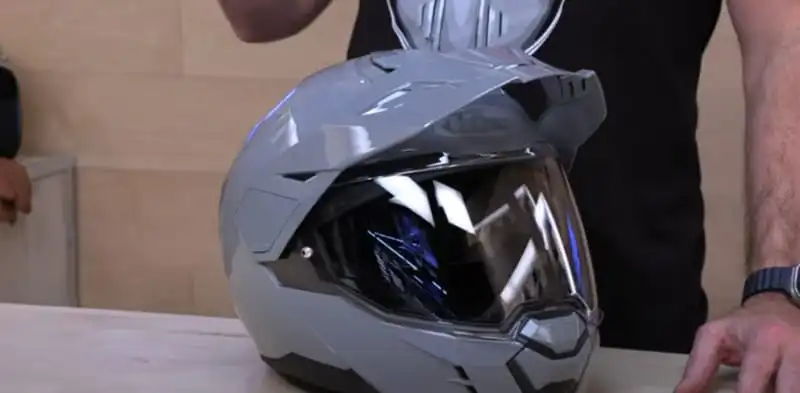
The HJC i80 Velly is available in sizes ranging from XS (53-54cm) through 2XL (62-63cm), giving riders six size options to find their optimal fit.
This adventure helmet uses three outer shell sizes across the full size range, which creates a more compact and proportional fit compared to single-shell designs that can look oversized on smaller heads.
I find this shell construction approach smart because it maintains the sleek profile regardless of your head size.
It runs true to size. HJC recommends measuring your head by wrapping a cloth measuring tape around your head just above your eyebrows and ears, pulling it comfortably snug, and using the largest measurement from two readings.
This intermediate oval head shape fits most riders perfectly from the first try, though the manufacturer advises the helmet should fit “snugly out of the box” to account for natural break-in of the interior padding.
What impressed me about ordering online is how reliable the sizing proves to be. Most retailers offer free returns or exchanges for fitment issues, provided you haven’t worn it on the road.
This takes the guesswork out of buying off-road helmets online, where fit matters tremendously for both comfort and protection during long rides.
The polycarbonate shell construction maintains consistent sizing across production runs, giving you confidence in the measurements.
But the three-shell system, while better than single-shell designs, represents a typical approach for this price point rather than the premium four or five-shell systems found on higher-end models.
Riders needing true 3XL sizing might find themselves out of luck, though I’ve noticed some riders mistakenly think they need larger sizes due to improper measurement or trying poorly fitting lids from other brands. The 2XL accommodates heads up to 62-63cm, which covers most riders who measure correctly.
The lightweight design and advanced ventilation system work together with the proper sizing to create a lid that feels secure without pressure points.
I’ve worn mine for hours during dual-sport touring without the hot spots or discomfort that plague poorly sized helmets.
HJC i80 Velly Sizing Chart
| Size | Head Circumference (cm) | Head Circumference (inches) |
|---|---|---|
| XS | 53-54 | 20.9-21.3 |
| S | 55-56 | 21.7-22.0 |
| M | 57-58 | 22.4-22.8 |
| L | 59-60 | 23.2-23.6 |
| XL | 61-62 | 24.0-24.4 |
| XXL | 62-63 | 24.4-24.8 |
How to Measure Your Head
To find your correct size, wrap a cloth measuring tape around your head just above your eyebrows and ears. Pull the tape comfortably snug and take the largest measurement from two readings. This measurement corresponds to the sizing chart above.
Shell Size Configuration
| Shell Size | Sizes Included |
|---|---|
| Small Shell | XS, S |
| Medium Shell | M |
| Large Shell | L, XL, XXL |
Important Sizing Notes
- The HJC i80 Velly features an intermediate oval head shape
- It should fit snugly out of the box to allow for natural break-in of the interior padding
- HJC recommends trying it on for 20-30 minutes at home before your first ride to check for pressure points
- It runs true to size according to multiple rider reports
- Cheek pads are interchangeable across all sizes for fine-tuning fit
- Most retailers offer free returns or exchanges for fitment issues if it remains unused
The modular design uses three outer shell sizes across the full size range, providing a more compact and proportional fit compared to single-shell designs that can look oversized on smaller heads.
HJC i80 Interior
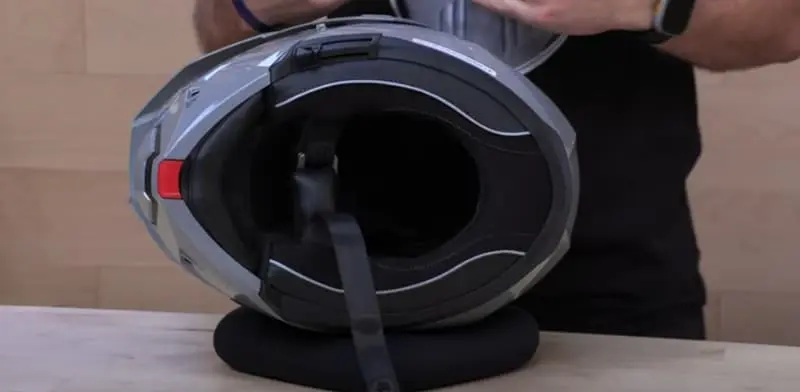
HJC i80 Velly interior is moisture-wicking, quick-dry, antibacterial, and odor-fighting, so I never step off the bike smelling like yesterday’s ride.
The 3D Comfort curved cheek pads cradle my jaw without pinching, and the crown lining sits smooth against my scalp.
Both pieces pop out in seconds, go straight into a gentle wash, and snap back in place still holding their shape-washing the helmet no longer feels like a chore.
The interior includes grooves specifically designed for glasses, which means you won’t have to choose between clear vision and comfortable riding.
One limitation I discovered involves customizing the fit – while the standard sizing works well for most riders, finding different crown pads or confirming cheek pad interchangeability across sizes can be challenging if you need fine-tuning.
I like that every cheek-pad size mates with every shell size. When I wanted a tighter feel for winter adventure riding, I swapped in thicker pads from a friend’s Medium; the fit tightened around my face while the crown stayed true.
One drawback is I struggled to source alternate crown pads, so tweaking vertical fit might take hunting around. Another point worth noting is that the cheek pads and neck roll arrive as a single unit. I like the simple removal for cleaning, yet replacing only one part isn’t an option.
Ventilation and Airflow
Advanced Channelling Ventilation System is the engine behind the fresh-air feel. Four intakes up front—two on the chin, one large top slider, and two side ports—feed cool flow through internal EPS channels, then two exhaust vents pull warm air out the back airflow ports.
- Chin ports aim straight at the shield, helping my Pinlock ready visor stay clear on damp mornings.
- The top slider moves easily with thick gloves, so I can balance heat and comfort on the fly.
- Passive chin-bar vents stay open. I welcome them in summer yet feel the chill during icy commutes.
On a 90°F day I rode stop-start through city traffic, flipped up the chin curtain, and felt heat bleed away fast. Out on the open road, airflow kept pace at 70 mph with no visor fog, and my glasses stayed clear too.
Some riders online call the chin vent “just ok,” and I get that sentiment when the bike idles at a light—flow drops until speed picks up again.
Quick Reference
| Interior Element | What I Notice on the Bike | Forum Buzz |
|---|---|---|
| Moisture-wicking liner | Stays dry even after a full-day ride in humid conditions | Praise for staying fresh on multi-day tours |
| Interchangeable cheek pads | Easy swaps let me fine-tune fit for winter balaclavas | One post questions availability of alternate crown pads |
| Neck curtain | Blocks drafts and adds a feeling of secure closure | Liked for highway runs, removed by some for extra airflow in summer |
| Passive chin vents | Welcome breeze in heat | Critiqued for lack of closure in freezing weather |
The interior may not carry exotic materials, yet it blends lightweight design, hygiene, and user-friendly maintenance. For my mix of daily commuting and weekend ADV touring, that balance wins the day.
HJC i80 Visor
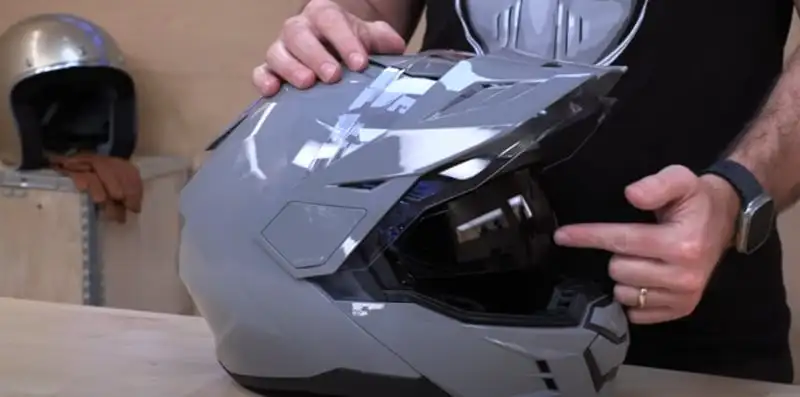
The HJC i80 Velly visor is a Pinlock ready HJ-44 anti-scratch coated shield that blocks 99% of UV rays while giving you a wide field of vision.
The dual tangs let me crack it open from either side, whether I’m reaching across with my left hand or grabbing the right tang naturally.
This ratchet system clicks into multiple detent positions with secure mechanical precision that feels solid ride after ride.
The wide aperture provides maximum clear sight lines that I notice most on twisty off-road routes where peripheral vision matters.
I can spot road hazards, oncoming traffic, and trail obstacles without moving my head around constantly. But the detent positions sit in awkward spots – the “city” mode stays nearly closed while the first notch opens too high, letting wind dry out my eyes or block lower sight lines when I need to check the instrument panel.
I found excessive grease around the visor mechanism when I first got mine. The factory lubrication gets on everything during shield changes, which take longer than I’d like because you need to pop up panels and work around screws underneath.
The visor itself feels sturdy and well-built, but swapping to a dark smoke replacement lens became a 15-minute job instead of the quick change I expected.
Sun Shield
The integrated HJ-V12 dark smoke sun shield drops down with a left-side slider that offers quick protection when you hit bright conditions.
This dual-stage operation gives you about 8mm of height adjustment, so you can position the smoke shield where it works with your riding position and sight lines.
But the sun visor feels flimsy compared to the main shield. Multiple forum posts describe it as “just barely enough” protection, and I agree – it sits right in the middle of your field of view instead of covering the full upper portion like better-designed internal shields.
On my touring rides, I tilt my head forward to get the sun blocked properly, which gets old fast during long highway stretches.
One rider I know had his sun visor jam completely, requiring dealer service to fix the mechanism. The lightweight design of this internal shield trades durability for comfort, but that trade-off shows up as reliability questions over time.
Anti-Fog System
Pinlock lens comes included in the box – a Max Vision type that covers more area than standard Pinlock inserts.
This dual-pane system creates an air gap between the main visor and inner lens, preventing fog buildup that would otherwise kill your vision during temperature changes or humid conditions.
The chin vent works with the Pinlock to keep airflow moving across the shield surface. During stop-and-go traffic on hot days, this combination kept my vision clear while other riders lifted their visors to deal with fogging.
The Max Vision design minimizes edge distortion, so I barely notice the Pinlock boundaries during normal riding.
Installing the Pinlock lens took patience – the pins require exact alignment, and that factory oil on the visor mechanism gets fingerprints all over the clear surface if you’re not careful.
Some riders online called the installation “really awkward,” and I understand why after wrestling with mine for 20 minutes getting the fit perfect. Once installed though, it works exactly as advertised for fog-free riding in any weather.
| Shield Component | Performance | Forum Feedback |
|---|---|---|
| Main HJ-44 visor | Wide vision, secure ratchet | Detent positions criticized |
| Sun shield HJ-V12 | Quick deployment | “Flimsy,” doesn’t drop low enough |
| Pinlock Max Vision | Fog-free operation | Installation described as awkward |
HJC i80 Noise Levels
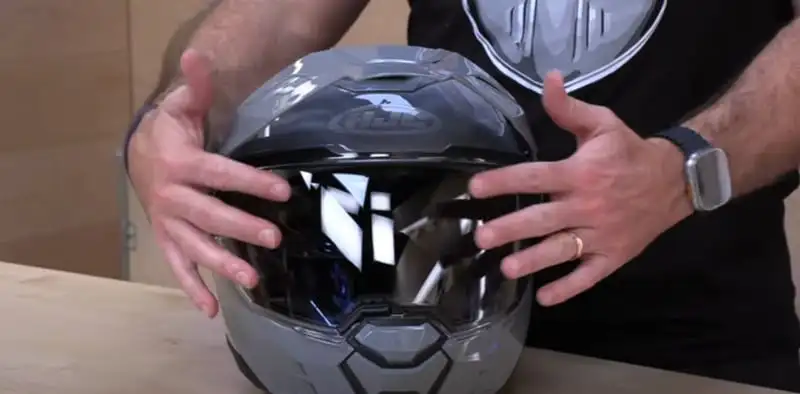
HJC i80 Velly is surprisingly quiet for a modular helmet, defying the common belief that flip-front designs create more wind noise than traditional full-face models.
I wear motorcycling earplugs on every ride, and this ADV lid performs comparably to my previous full-face helmets in terms of acoustic comfort.
The integrated neck roll creates a continuous seal around the back of my head, working with the chin curtain to block airflow from entering the bottom opening.
During highway riding, I hear minimal wind roar even at 75 mph when I keep the front and top vents adjusted properly.
My GPS navigation audio comes through clear without competing against excessive wind noise, making those long touring days more comfortable.
The lightweight design doesn’t sacrifice acoustic performance – the polycarbonate shell and secure sealing system work together to create a quieter ride environment than I expected from a flip-up design.
But one forum user who switched from another HJC flip-face model found the wind noise from the larger visor “really annoying” and had to invest in ear plugs.
I understand this complaint because the wider aperture that provides maximum vision also creates more surface area for wind interaction.
On my bike, I notice increased noise when the peak visor catches crosswinds, though it’s manageable with proper ear protection.
Noise Reduction Strategies
The neck roll design minimizes air entry from the bottom, which I find more effective than separate chin curtains that can shift during riding.
When I open the top ventilation completely on hot days, I hear more wind roar, but closing it partially brings noise levels back down while maintaining adequate airflow.
The ACS ventilation system lets me fine-tune the balance between cooling and acoustic comfort based on road conditions.
| Riding Situation | Noise Level With Earplugs | Wind Management |
|---|---|---|
| City riding 25-45 mph | Very quiet | Vents open for comfort |
| Highway 65-75 mph | Comparable to full-face | Front vents partially closed |
| Off-Road trails | Minimal wind noise | All vents open for maximum cooling |
The HJC’s older C80 model suffered from significant airflow under the chin bar, even with a chin curtain.
The i80 addresses this issue with its advanced sealing system that creates a more secure acoustic barrier.
The modular design doesn’t compromise safety or comfort when you need a quiet environment for long-distance riding.
I like how the removable chin curtain can be pinned up for extra airflow in stop-and-go traffic without creating excessive noise.
The features that make this lid work for touring – the peak, wider visor, and ventilation system – could theoretically increase noise, but the design team managed the acoustic engineering well enough that it stays quiet when properly fitted and used with appropriate ear protection.
HJC i80 Safety Ratings
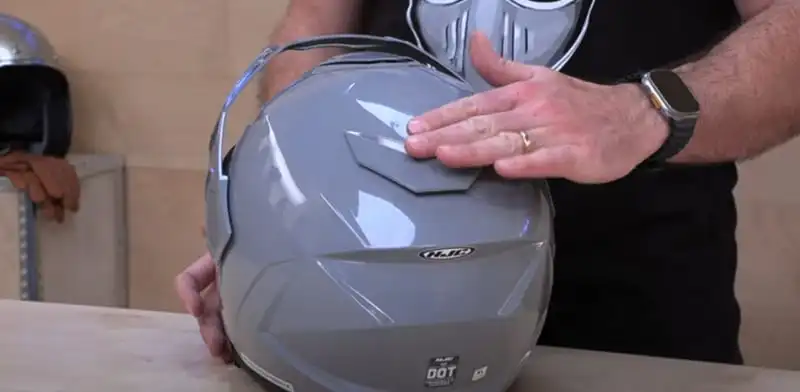
The HJC i80 Velly is P&J homologated, which means I can ride with confidence knowing it’s certified for safe use in both full-face (protective) and open-face (jet) configurations.
This dual homologation gives me the flexibility to flip up the chin bar at traffic lights without compromising safety certification.
It meets ECE 22.06 standards, which represents the current gold standard in motorcycle helmet safety testing, and it’s DOT certified for US riders.
The advanced polycarbonate composite shell provides solid impact resistance while keeping weight down.
I find this material choice practical because it delivers reliable protection without the premium price of carbon fiber or fiberglass alternatives.
But you won’t find MIPS technology in this modular design – a feature that’s becoming more common in lids at this price point for rotational impact protection.
Closure System and Chin Bar
It features a Double D-Ring chinstrap that creates a secure connection I trust during high speed riding.
The rotational chin bar locks confidently and feels solid when engaged. This modular design offers full-face protection when closed, and the locking mechanism gives me confidence that it won’t accidentally open during a crash.
The chin guard design maintains structural integrity whether you’re touring on the road or tackling trails.
| Safety Feature | Certification Level | Real-World Benefit |
|---|---|---|
| P&J Homologation | ECE 22.06 approved | Safe use open or closed |
| Shell Construction | DOT certified | Lightweight impact resistance |
| Chin Bar | Modular design tested | Full-face protection when needed |
| D-Ring Closure | Traditional secure system | Reliable connection at high speeds |
Safety Considerations
The absence of MIPS technology might concern riders looking for the latest rotational impact protection features.
Some ADV riders I know specifically look for MIPS-equipped lids for trail riding where angular impacts are more likely.
The polycarbonate shell performs well for its price point, but riders coming from premium carbon fiber lids might notice the difference in impact absorption characteristics.
Regional variations in closure systems create some confusion when ordering online. While the D-ring system offers proven reliability, riders accustomed to quick release mechanisms might find the traditional approach slower for frequent removal during tours with multiple stops.
The modular design strikes a balance between safety and convenience that works well for off-road riding.
I get full-face protection when I need it and open-face convenience when conditions allow, all while maintaining proper safety certifications that give me confidence on any ride.
HJC i80 Velly Weight
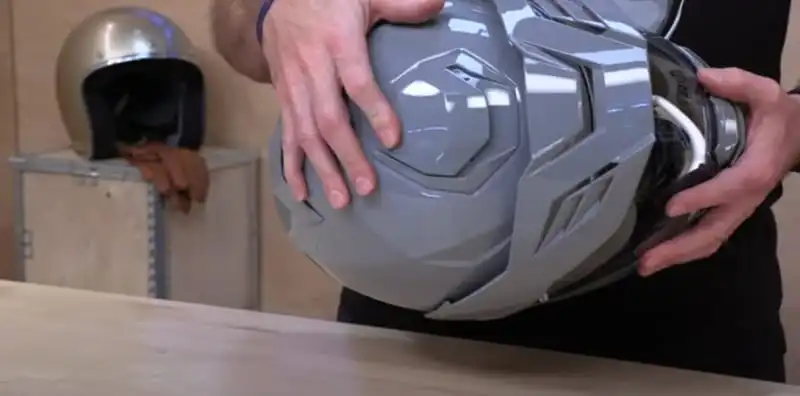
The HJC i80 Velly is not what you’d call lightweight, tipping the scales at approximately 4 lbs 2 oz (1882 grams) across the size range.
A medium weighs 3 lbs 10 oz (1650 grams) while a large comes in at 3 lbs 12 oz (1700 grams). This modular design carries more mass than traditional full-face helmets because of the flip-up chin bar mechanism, peak visor, internal sun shield, and advanced ventilation system.
Weight by Size
| Size | Weight (lbs/oz) | Weight (grams) |
|---|---|---|
| Medium | 3 lbs 10 oz | 1650g |
| Large | 3 lbs 12 oz | 1700g |
| Average | 4 lbs 2 oz | 1882g |
But the weight feels manageable during riding. One reviewer I read online summed it up perfectly: “weight on this thing honestly is not bad at all.”
The polycarbonate shell construction keeps the mass reasonable compared to heavier flip up lids that can exceed 4.5 lbs.
I find the weight distribution balanced well enough that neck fatigue doesn’t become an issue during day-long touring sessions.
The trade-off becomes apparent when you compare it to dedicated road riding lids that can weigh 2.5-3 lbs.
Those light helmets sacrifice the peak visor, modular functionality, and internal sun visor that make the i80 perfect for touring.
The extra weight comes from features that matter: the secure chin bar mechanism, sun shield system, and ACS ventilation components that provide comfort across varied riding conditions.
Weight Distribution Impact
The balances the mass between the front peak and back ventilation components, so the center of gravity sits close to your head’s natural balance point.
During high speed highway riding, I notice the weight slightly more than with my lighter sport helmet, but it’s not distracting.
| Size | Weight (lbs/oz) | Weight (grams) | Comparison |
|---|---|---|---|
| Medium | 3 lbs 10 oz | 1650g | Typical modular range |
| Large | 3 lbs 12 oz | 1700g | Manageable for ADV use |
| Average | 4 lbs 2 oz | 1882g | Features justify mass |
Does The Extra Weight Matter
Dual-Sport riders I know online debate whether the extra weight matters for trail riding. My experience suggests it’s noticeable during technical off-road sections where you’re moving your head frequently to scan terrain.
The polycarbonate composite shell provides solid protection without reaching the extremes of some modular lids that can feel neck-straining after hours of use.
The weight reflects the dual-purpose nature. You get modular convenience, peak protection, internal sun visor, and advanced airflow features at the cost of carrying more mass than single-purpose helmets.
For motorcycle ADV touring where versatility matters more than weight savings, this balance works. But riders prioritizing lightweight design over features should look at dedicated sport or road helmets that sacrifice modular functionality for reduced mass.
HJC i80 Velly Bluetooth Options
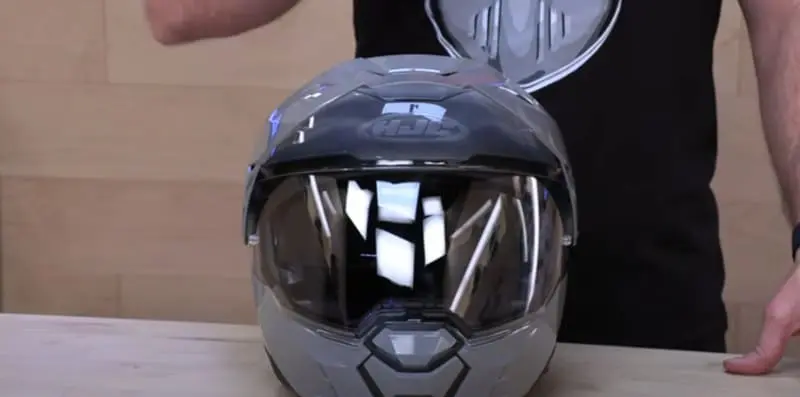
HJC i80 Velly is Bluetooth compatible with recessed speaker pockets that make integrating communication systems straightforward.
The design includes marked clamp mount points that become visible once you remove the cheek pads, giving you clear guidance for mounting Cardo, Sena, or other aftermarket communication devices.
The flat side surface provides a clean mounting area for adhesive-based systems without interference from proprietary HJC communication options.
I find this approach refreshing because it doesn’t lock me into a specific brand ecosystem. Many lids force you toward the manufacturer’s own communication system, but the i80 lets you choose what works for your riding style and budget.
The speaker pockets sit perfectly positioned for comfort during long touring sessions, and the modular design gives you easy access to wire routing when the chin bar flips up.
But HJC doesn’t offer a dedicated integrated communication system specifically for this model, unlike some of their other lids.
This means you’ll need to source and install third-party options rather than getting a plug-and-play solution from the manufacturer.
A minor inconvenience, though most off-road riders already have preferred communication brands anyway.
Installation Experience
The removable cheek pads make speaker installation much easier than lids where you need to work around permanent padding.
I can position speakers exactly where they feel comfortable against my ears, then route wires cleanly through the shell openings.
Color Options
HJC i80 Velly is available in multiple solid colors and graphic schemes that let you match your motorcycle and gear while boosting road visibility.
The solid color lineup includes White, Matt Black, Black, Grey, and Beige – clean options that work with any bike style.
The White version features a pearlescent finish that looks sharp under different lighting conditions.
Graphics and Visibility
The graphic options add character and safety benefits. Roki Yellow stands out as the visibility champion – this bright colorway catches attention in traffic while adding attitude to the appearance.
Roki Orange/Black combines high-visibility orange with sleek black accents for riders who want both safety and style. Velly Black and Velly Red offer more subdued graphic treatments that still look distinctive on the road.
Graphics typically cost a few dollars extra compared to solid colors, but I think the visibility and aesthetic benefits justify the premium.
Off-Road users spend considerable time in varied traffic conditions, and the Roki Yellow particularly helps other drivers spot you earlier during day and evening riding.
Comparison to Similar Models
| Model Name | Color Option(s) |
|---|---|
| HJC i80 Helmet | Black, Matte Black, White, Grey, Beige, Matte Blue |
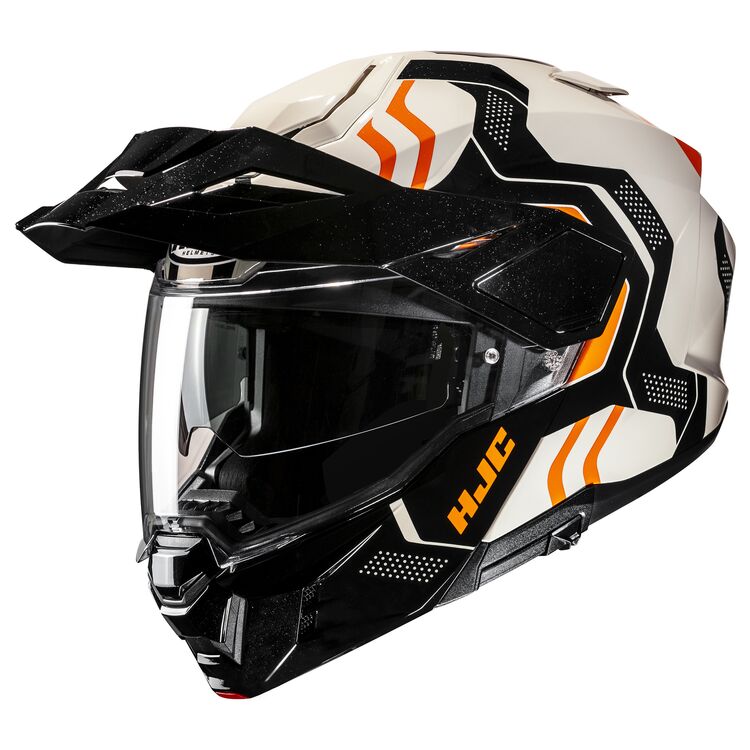
| HJC i80 Velly Helmet | Beige/Black/Orange |
| HJC i80 Roki Helmet | Green/Black/Orange, White/Blue/Red |
Detailed Color Comparison:
- HJC i80 Helmet: This standard model offers the widest variety, available in single-color designs: Black, Matte Black, White, Grey, Beige, and Matte Blue. These options cover basic and matte finishes suited for various preferences.
- HJC i80 Velly Helmet: Available exclusively in a unique Beige/Black/Orange graphic colorway, distinguishing itself with a custom look.
- HJC i80 Roki Helmet: Comes in two multi-color graphics: Green/Black/Orange and White/Blue/Red, targeting riders seeking bold and sporty styles.
Each model’s main differences are graphic design and color choice—the core technology, comfort, and safety features remain consistent across the line.
FAQ
The HJC i80 Velly is the subject of many rider questions, so I’ve compiled the most common inquiries based on real user experiences and forum discussions.
Is the HJC i80 comfortable for long rides?
Comfort during extended touring stands out as one of it’s strongest features. I find it comfortable from the first wear, with no pressure points developing even during day-long riding sessions in hot weather. The intermediate oval fit and 3D cheek pads distribute weight evenly, while the moisture-wicking interior keeps things comfortable during heatwave conditions. Multiple forum users confirm this experience, with one rider specifically mentioning comfort during long days in the saddle without any hot spots.
Does it come with a Pinlock?
It arrives Pinlock ready with a Max Vision Pinlock lens included in the box. This dual-pane system creates fog-free vision that works with the chin ventilation to keep your shield clear during temperature changes. I appreciate getting this value-add included rather than having to purchase it separately like many other lids in this price range.
Can I wear glasses with this helmet?
Glasses fit comfortably thanks to dedicated grooves cut into the cheek pads. The design accommodates standard eyewear without pinching or creating pressure points behind your ears. One user confirmed that Scott Split goggles fit properly, and I’ve found the glasses channels work well with various frame styles.
Is the peak visor removable?
The peak visor detaches completely, and HJC includes side plates (plugs) to cover the attachment points when you ride without it. This flexibility lets you switch between off-road and road riding configurations based on your route. The removable peak transforms the appearance and aerodynamics for highway-focused trips.
Is the HJC i80 noisy?
Noise levels depend heavily on ear protection. With motorcycling earplugs, it performs quietly and comparably to full-face helmets even at motorway speeds. The integrated neck roll and chin curtain create a secure seal that blocks wind entry from below. But riders sensitive to noise or those who skip earplugs may find it loud, particularly due to the larger visor aperture that creates more surface area for wind interaction.
Is the sun visor adjustable?
The internal dark smoke sun shield offers dual-stage operation with about 8mm of height adjustment. You can position it partially or fully deployed based on lighting conditions. But many users find it doesn’t drop low enough to block sun effectively, requiring you to tilt your head forward for proper coverage. This limitation shows up frequently in forum discussions as a compromise in the modular design.
What safety ratings does it have?
Safety certifications include P&J homologation, meaning it’s certified for safe use in both full-face and open-face configurations. It meets ECE 22.06 standards, which represent current safety testing requirements. US market versions are primarily DOT compliant, though regional variations may affect which certifications apply to your specific purchase.
Final Verdict
The HJC i80 Velly is a solid helmet that delivers quality modular design at a budget-friendly price point. This lid offers a compelling blend of safety, comfort, and style that defies its classification as a budget option.
The advanced polycarbonate shell, Pinlock ready visor, and ACS ventilation system provide features typically found on more expensive lids.
The value proposition becomes clear when you consider what’s included. Pinlock lens in the box. Removable peak visor with side plates.
Washable interior with moisture-wicking properties. P&J homologation for safe use in both open and closed positions. These features add up to solid value for off-road riding across varied conditions.
But trade-offs exist. The peak visor vibrates at high speeds, creating wind resistance that becomes noticeable above 40-55 kph.
The internal sun shield doesn’t drop low enough for many riders, requiring head tilting to block sun effectively. At 4 lbs 2 oz, it’s not a lightweight option compared to dedicated road helmets.
Real-World Performance
I find it comfortable from the first wear, with no pressure points developing during day-long tours.
The intermediate oval fit works for most head shapes, and the glasses grooves accommodate eyewear without pinching.
Noise levels stay manageable with proper ear protection, and the modular design provides genuine convenience for fuel stops and communication.
| Strength | Trade-off | Overall Impact |
|---|---|---|
| Comfort and fit | Heavier than sport helmets | Manageable for ADV use |
| Value features included | Peak vibration at speed | Acceptable for dual-sport riding |
| Modular convenience | Sun visor positioning | Minor inconvenience |
| Safety certifications | No MIPS technology | Solid protection for price |
More Details
Who Is It For
The design works for mixed riding – trail adventures, road touring, and daily commuting. The removable peak and flip-up chin bar offer flexibility that dedicated full-face helmets can’t match.
HJC i80 Velly succeeds as a reliable, comfortable, and well-made modular lid that doesn’t break the bank.
The minor drawbacks pale compared to its strengths: solid safety ratings, comfortable fit, advanced ventilation, and included features that add real value.
For riders wanting modular convenience and off-road capability at a reasonable price, it delivers exactly what it promises.
The lightweight polycarbonate construction, tunnel tested aerodynamics, and secure modular system create a package that works for real-world motorcycle off-road touring.
While it may not offer exotic materials or cutting-edge technology, it provides solid performance where it counts – protection, comfort, and versatility for the money.
Buyer’s Guide (What To Look For)
HJC i80 Velly is a modular helmet that demands careful consideration of your specific riding needs before purchase.
Fitment stands as the most critical factor – it should fit snugly without causing pain or discomfort, allowing natural break-in of the interior padding.
I always recommend wearing any new helmet for 20-30 minutes at home to check for pressure points or “hot spots” that develop over time.
It features an intermediate oval head shape, so you need to match this profile to your head geometry.
Those people with round or long oval heads might find pressure points that make long-distance riding uncomfortable.
The lightweight polycarbonate construction won’t compensate for poor fit, and the modular design adds complexity that makes proper sizing more important than with traditional full-face helmets.
Modular Convenience vs. Peak Performance
Modular convenience becomes valuable if you frequently make stops or dislike removing your lid for brief interactions.
The flip-front design offers genuine practicality during fuel stops, restaurant visits, or navigation checks. But the removable peak visor creates trade-offs you need to consider.
Forum users report that the peak causes noticeable vibration at high speeds above 40-55 kph, which might necessitate its removal for highway touring.
I find the peak’s dual nature interesting – it provides sun protection and styling when you need it, yet removes completely with included side plates when you don’t.
This flexibility works well for mixed riding, though riders prioritizing the aesthetic might feel disappointed removing such a defining design element.
Safety and Ventilation Requirements
Safety certifications vary by region, so verify it meets ECE 22.06 or DOT standards for your area.
The P&J homologation allows safe use in both open and closed positions, giving you confidence during modular operation.
The advanced polycarbonate shell provides solid impact resistance, though it lacks MIPS technology found in some competing helmets.
The ACS ventilation system includes chin and top vents plus back exhaust ports that work well for dual-sport riding conditions.
If you ride in hot, humid climates, test the airflow during your home try-on period. The system moves air effectively at speed but can feel limited during slow-speed technical riding where natural airflow decreases.
Sun Protection and Communication Compatibility
The integrated dark smoke sun shield offers quick protection changes, but many users find it doesn’t drop low enough for maximum coverage.
This limitation appears frequently in forum discussions as a potential deal-breaker for riders needing comprehensive sun protection.
The shield’s 8mm adjustment helps, but you might still need to tilt your head forward for proper coverage.
Communication system compatibility matters if you use intercoms regularly. It includes recessed speaker pockets and marked clamp mount points visible after removing cheek pads.
The flat side surfaces work well for adhesive mounting of Cardo, Sena, or other aftermarket systems without forcing you into proprietary HJC options.
Value Assessment
| Feature | Benefit | Limitation |
|---|---|---|
| True-to-size fit | Reliable online ordering | Intermediate oval only |
| Glasses grooves | Comfortable eyewear use | Limited frame size accommodation |
| Removable peak | Adventure/road versatility | Vibration at speed |
| Sun visor | Quick protection changes | Limited drop coverage |
| 3-year warranty | Long-term protection | Varies by region |
Technical Terms Glossary
Advanced Polycarbonate Composite Shell
A lightweight blend of high-grade polycarbonate with ABS plastic in an optimal ratio that creates the outer shell. This composite material provides solid impact resistance while keeping costs reasonable compared to premium materials like carbon fiber. The construction balances protection and weight for off-road riding applications.
ABS (Acrylonitrile Butadiene Styrene)
A thermoplastic polymer that adds impact strength and durability to the polycarbonate shell composite. ABS provides enhanced crack resistance and helps maintain structural integrity during impacts. This material contributes to the overall safety performance at the budget price point.
Thermo-Resin
An alternative term some manufacturers use to describe the polycarbonate composite shell construction. The material undergoes thermal molding processes to create the and structure. This design approach allows for consistent shell thickness and optimal protection distribution.
Intermediate Oval Head Shape
A profile that accommodates heads that are moderately longer front-to-back than they are wide side-to-side. This represents the most common head shape among motorcycle riders worldwide. The fit sits between round oval (wider) and long oval (narrower) design profiles.
3D Comfort Curved Cheek Pads
Interior padding components shaped using three-dimensional molding to follow facial contour lines naturally. These cheek pads distribute pressure evenly around the jaw area for comfortable long-distance riding. The curved design eliminates pressure points that can develop with flat padding.
Advanced Channelling Ventilation System (ACS)
A ventilation network that creates full front-to-back airflow through internal shell channels to flush heat and humidity out. The system includes multiple intake and exhaust vents working together for maximum cooling. This advanced design maintains airflow even at high speeds during off-road riding.
CFD (Computational Fluid Dynamics)
Computer simulation technology used to analyze airflow patterns around the peak visor design. Wind tunnel testing combines with CFD programs to optimize aerodynamic performance and reduce drag. These programs help design teams predict wind resistance and stability at high speeds.
Pinlock
A dual-pane anti-fog system that creates an insulating air gap between the main visor and an inner lens. The Pinlock lens prevents condensation buildup that would otherwise obstruct vision during temperature changes. This technology maintains clear sight lines in humid conditions or when transitioning between temperature zones.
Max Vision Pinlock
A larger Pinlock lens that covers more of the visor area to minimize edge distortion and provide better peripheral vision. The extended coverage reduces the visible boundaries of the anti-fog insert during normal riding. This design offers improved field of view compared to standard Pinlock systems.
HJ-44 Anti-Scratch Coated Visor
The main face shield featuring a protective coating that resists surface damage from debris and cleaning. The coating maintains clear vision by preventing micro-scratches that can scatter light and reduce visibility. This visor provides 99% UV protection while maintaining optical clarity.
HJ-V12 Dark Smoke Sun Shield
An integrated internal sun visor that drops down to provide instant glare protection without changing the main shield. The dark smoke tint reduces bright sunlight while maintaining clear vision of the road ahead. The shield operates independently of the main visor for quick adjustment to changing light conditions.
Dual-Pane System
A visor configuration that uses two separate lens layers with an air gap between them for anti-fog performance. The outer pane handles impact protection while the inner pane prevents condensation formation. This system maintains clear vision across varied temperature and humidity conditions.
P&J Homologated
A safety certification that allows it to be used legally in both protective (full-face) and jet (open-face) configurations. This dual approval means it meets safety standards when the chin bar is both up and down. The certification validates the protection in multiple riding configurations.
ECE 22.06 Safety Certification
The current European safety standard for motorcycle helmets that includes rigorous testing for impact absorption, penetration resistance, and retention system strength. This certification represents updated testing protocols compared to previous ECE 22.05 standards. Lids meeting ECE 22.06 pass more stringent impact and safety requirements.
DOT Certified
United States Department of Transportation safety certification that validates helmet protection standards for American riders. DOT certification requires specific impact absorption and penetration resistance testing protocols. This standard applies to lids sold in the US market for legal road use.
MIPS (Multi-directional Impact Protection System)
A safety technology designed to reduce rotational forces transmitted to the brain during angled impacts. MIPS uses a low-friction layer that allows it to rotate slightly upon impact to redirect energy. This system addresses rotational motion that can occur during real-world crash scenarios.
Double D-Ring Chinstrap
A secure closure system using two metal D-shaped rings and a strap to fasten it under the chin. The system provides reliable retention that won’t accidentally release during impacts or high-speed riding. This traditional closure method offers proven safety performance across decades of motorcycle use.
Ratchet System
A visor opening mechanism that uses spring-loaded detents to hold the shield in specific positions. The system allows quick visor operation with gloved hands while maintaining secure positioning. Multiple detent levels provide precise ventilation control and protection adjustment.
Recessed Speaker Pockets
Interior spaces specifically designed to accommodate communication system speakers without creating pressure points. These pockets position speakers optimally for clear audio while maintaining comfort during long rides. The design allows easy integration of aftermarket Bluetooth communication devices.
Modular Helmet
A design that combines full-face protection with the convenience of an open-face configuration through a hinged chin bar. The flip-up design allows quick face access for communication, eating, or drinking without removing the entire helmet. This versatility makes modular helmets popular for dual-sport touring and commuting applications.
Peak Visor
A sun-blocking extension that projects forward from the front edge to shield the rider’s eyes from overhead sunlight. The peak also provides debris protection during off-road riding and adds to the adventure aesthetic. This removable component can cause wind resistance at high speeds on paved roads.
Chin Curtain
A fabric barrier that seals the bottom opening to reduce wind noise and airflow around the opening.
Moisture-Wicking
Fabric technology that draws sweat and humidity away from the skin toward the outer surface where it can evaporate. This system keeps the rider’s head dry and comfortable during physical exertion or hot weather riding. The material maintains comfort by preventing moisture buildup against the skin.
Quick-Dry
Material properties that allow rapid evaporation of moisture to maintain dry comfort during riding. Quick-dry fabrics reduce the time needed for the interiors to return to normal comfort levels after sweating. This feature particularly benefits riders in humid climates or during adventure touring.
Antibacterial
Chemical treatment or material properties that inhibit bacterial growth within the interior to prevent odors. This treatment maintains hygiene during regular use and extends the time between washable interior cleanings. Antibacterial properties contribute to overall cleanliness and user comfort.
Maintenance
that go straight into a gentle wash cycle.
The cheek pads and neck roll form a one-piece unit, which makes removal and washing simpler than lids with separate components.
I can pop out the entire cheek pad assembly in seconds, throw it in with my regular laundry, and have it back in place while still holding its shape and comfort.
HJC recommends trying it on for an hour at home without using it on the motorcycle if you’ve purchased online.
This policy allows returns in brand new, unused condition if fit becomes an issue during extended wear. I find this approach smart because it lets you discover pressure points or comfort issues before committing to the purchase – something you can’t determine during a brief store try-on.
Warranty and Parts Availability
It comes backed by a 3-year factory warranty, with some sources indicating coverage up to 5 years from purchase date.
This warranty period provides peace of mind regarding the durability of the modular mechanism and polycarbonate shell construction. Replacement parts like different shields, peak visors, and interior components stay available through retailers, supporting long-term use and customization.
Peak and Fastener Maintenance
The peak visor bolts require occasional attention. One rider I know online mentioned his bolts kept coming loose, requiring periodic tightening during regular riding.
I check mine every few weeks because vibration from road conditions and wind resistance can gradually loosen the fasteners. The removable peak design makes this check simple, and keeping a small toolkit handy prevents issues.
Ventilation components stay relatively maintenance-free, though the ACS system vents benefit from occasional dust removal after off-road riding.
The chin and top ventilation sliders move smoothly with minimal care, but debris can accumulate in the intake ports during adventure conditions.
Interior Care Routine
| Maintenance Task | Frequency | Quick Method |
|---|---|---|
| Washable cheek pads | Weekly during heavy use | Gentle cycle, air dry |
| Crown padding cleaning | Monthly | Removable for hand washing |
| Visor mechanism | Before shield changes | Clean grease with dry cloth |
| Peak bolt check | Every 2-3 weeks | Finger-tight with small wrench |
The washable interior components maintain their moisture-wicking properties even after multiple wash cycles.
I’ve put mine through dozens of cleanings during touring seasons, and the quick-dry fabric still performs like new. The antibacterial treatment continues working, keeping odors at bay during multi-day trips.
Parts availability makes long-term ownership practical. I can source replacement shields, dark smoke sun visors, or even different cheek pad thicknesses when needed.
The modular design means individual components can be serviced or replaced without affecting the entire helmet, making it a cost-effective choice for riders who put serious miles on their gear.
The lightweight polycarbonate shell requires minimal care beyond normal cleaning. Anti-scratch coatings on the shield maintain their protective qualities with proper handling, and the composite construction shows solid durability during regular use.
The 3-year warranty coverage gives confidence that HJC stands behind their modular construction and design.
User Feedback
The HJC i80 Velly is consistently praised by riders as a “very good helmet for the money” that doesn’t break the bank while delivering solid performance.
Forum discussions reveal overwhelming positive feedback about its value proposition – riders repeatedly mention it doesn’t feel ‘budget’ in any way despite its accessible pricing.
The modular design and advanced features like the Pinlock ready visor and ACS ventilation system create a package that punches above its weight class.
Comfort stands out as the most universally praised aspect. I’ve read countless posts from riders who found it comfortable from the first try, with no annoying pressure points developing even during day-long riding sessions.
The intermediate oval fit and 3D cheek pads work for most head shapes, and the glasses grooves accommodate eyewear without creating pressure behind the ears.
Ventilation and Acoustic Performance
The ventilation system surprises many users with its effectiveness. Multiple forum members describe the airflow as “surprisingly effective,” particularly on warmer days when the chin and top vents prevent visor fogging.
The ACS design moves air efficiently through the interior, keeping riders cool during stop-and-go traffic and high speed highway riding.
Noise levels earn praise when combined with proper ear protection. Riders consistently describe it as “very quiet” with minimal wind noise when wearing motorcycling earplugs.
The secure seal created by the neck roll and chin curtain blocks airflow from entering the bottom, contributing to acoustic comfort comparable to traditional full-face helmets.
Vision and Build Quality
The wide aperture visor provides what users call an “optimal field of view” that becomes particularly noticeable during twisty road riding where peripheral vision matters.
The clear sight lines help with safety during touring where road hazards and traffic require constant awareness.
Build quality impresses riders who expected compromises at this price point. It feels “solid and well made” with sturdy moving parts that click satisfyingly into place.
The polycarbonate shell and modular mechanism show solid construction that riders trust for long-term use.
Common Frustrations
| Issue | User Description | Frequency |
|---|---|---|
| Peak vibration | “Vibrate like crazy” above 25-34 mph | Very common |
| Sun shield coverage | “Flimsy,” doesn’t drop low enough | Common |
| Visor mechanisms | Excessive grease, bolts loosening | Occasional |
| Weight | “Not light” for features included | Noted but accepted |
The internal dark smoke sun shield draws frequent criticism as “flimsy” and inadequate. Users consistently mention it doesn’t drop low enough, requiring head tilting to block sun effectively.
This limitation appears in nearly every detailed review as a compromise that detracts from the ADV riding experience.
Visor mechanism issues surface occasionally. Some riders report excessive grease in the mechanisms that can smudge the shield during handling.
Others mention bolts coming loose or finding the Pinlock lens “awkward to put in,” though store assistance typically resolves installation difficulties.
The visor detents also receive criticism for sitting in “annoying places” that don’t align with practical riding positions.
Weight Considerations
While riders understand the 4 lbs 2 oz weight reflects the features and modular construction, many note it’s “not light” compared to dedicated road helmets.
The lightweight polycarbonate design keeps mass reasonable for its feature set, but ADV riders accustomed to ultra-light sport helmets notice the difference during extended riding sessions.
The overwhelming positive feedback about value, comfort, and build quality makes the i80 a strong recommendation for its target audience.
Riders seeking modular convenience and adventure capability at a reasonable price find the trade-offs acceptable.
The consistent criticism of the peak’s high-speed performance and sun visor coverage represent the main detractors for riders prioritizing highway riding or maximum glare protection.
Forum consensus suggests it delivers exactly what it promises – solid modular performance with adventure styling at a budget-friendly price.
The minor issues pale compared to the value proposition for riders who need flip-front convenience and don’t mind removing the peak for high-speed touring.