
Schuberth C3 Pro packs DFP fiberglass shell. Pinlock visor fights fog. I test acoustics at 82 dB(A). In my experience, this modular flip-up shines on motorway hauls but fights heat in traffic. You’ve seen hype. I cut through it.
I’ve logged 6 months with the Schuberth C3 Pro. Hundreds of helmets crossed my desk these past ten years. Quiet chin bar locks deliver calm miles. But screen turbulence spikes whistles. Does our Schuberth C3 Pro review match your bike setup?
Schuberth C3 Pro Review
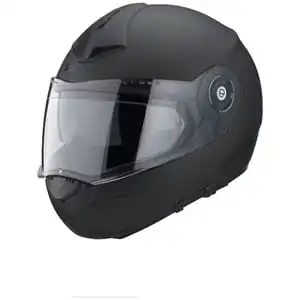
Key Takeaways
- Chin bar locks hold in crashes
- ECE 22.05 certs clear road use
- Pinlock visor fights fog in the rain
- DFP fiberglass shell weighs 3 lb 7 oz
- Schuberth C3 Pro cuts noise to 82 dB(A)
Schuberth C3 Pro Review
I’ve put together an in-depth Schuberth C3 Pro review, covering everything from DFP fiberglass shell to real-world noise and fit. But I get it – sometimes you just want the highlights.

Click the tabs below for a quick summary of strengths and weaknesses. You’ll also find my video review where I test this lid on motorway runs.
It’s perfect if you’re short on time or want to gauge if this touring modular fits your needs.
Want to jump to a specific section? Use the table of contents menu on the right-hand side of the screen.
Schuberth C3 Pro Strengths
- Exceptional wind noise reduction – Hits 82 dB(A) at 100 km/h in tests; feels noticeably calmer than most modulars on clean airflow setups.
- DFP fiberglass shell – Dense composite construction absorbs impacts well while staying light at 3 lb 7 oz (medium size).
- Integrated sun visor – Optical Class 1 drops smoothly with gloves; stops anywhere for precise glare control without distortion.
- Pinlock anti-fog included – Creates a reliable thermal barrier when tensioned correctly; essential for wet touring conditions.
- Bluetooth-ready pockets – Sena SC10U and Cardo SRC units fit factory pockets with embedded dual antennas for a clean signal.
- Chin bar reliability – A.R.O.S. system and mechanical lock score 97-100% in SHARP chin bar tests; feels solid when flipped down.
- Removable/washable liner – COOLMAX fabrics hand wash clean at 30°C; antibacterial treatment fights sweat odor after long days.
- Broad size range – XS-3XL covers most heads; intermediate oval shape fits average European skull proportions well.
- Premium paint finishes – Metalflake Intensity graphics and solids like Matte Black hold up to road grime and look expensive.
- Touring ergonomics – Micrometric buckle centers away from throat; plush padding breaks in for all-day comfort on right head shapes.
Schuberth C3 Pro Weaknesses
- Screen turbulence sensitivity – Tall windscreens create whistling and roar spikes; needs specific bike/airflow tuning for quiet performance.
- Limited ventilation flow – Top vent delivers “minimal trickle”; chin curtain traps heat in summer traffic despite summer/winter flap.
- Visor city position fails – Cracked-open notch slams shut above 40 mph; no reliable halfway stop without aftermarket fixes.
- Forehead pressure points – Long oval heads get “Schuberth forehead” ache after 60 minutes; needs liner modification.
- Two-shell sizing gaps – Large-to-XL jump feels loose/tight; smaller sizes look “fishbowl” bulky due to padding thickness.
- Thick neckroll restrictive – Seals noise well but feels suffocating around Adam’s apple; hard to swallow in tight fit.
- Pinlock installation fussy – Loose tension causes moisture leaks between panes; blurs worse than simple fogging.
- 3-star SHARP rating – Side impacts score average vs. full-face rivals; modular compromises show in raw protection numbers.
- Micrometric buckle bulky – Ratchet housing presses jaw if not perfectly adjusted; D-ring fans hate the plastic feel.
- Conservative graphics – Sestante/Intensity patterns lack edge vs. HJC neon or Icon skulls; touring conservative only.
- Women’s model limited – XS-L sizing with ruby liner helps but still needs swaps; not full range availability.
- No SNELL certification – Road-legal only; track riders must look elsewhere for race-standard impact testing.
Schuberth C3 Pro Full Specifications
Construction & Materials
- Shell Material: S.T.R.O.N.G. fiber (Direct Fiber Processing (DFP) fiberglass/resin composite)
- Shell Sizes: 2 outer shells (XS-XXL and XL-3XL)
- Weight: 3 lb 7 oz to 3 lb 8 oz (medium size, varies by graphics)
- Inner Shell: Multi-zone EPS foam (modular design for optimal shock absorption)
- Interior Liner: COOLMAX, Interpower®, Thermocool® fabrics (Oeko-Tex 100 certified)
- Liner Properties: Allergen-free, antibacterial, moisture-wicking, removable, machine washable (30°C hand wash)
Safety & Certifications
- Safety Standards: DOT FMVSS 218, ECE 22.05
- SHARP Rating: 3-star overall (97-100% chin bar retention success)
- Anti-Roll-Off System: A.R.O.S. (neck pads prevent rear rotation)
- Reflective Elements: Silver reflex pads at the nape for night visibility
- Chin Bar: Tested as a full-face equivalent when locked (no SNELL rating)
Visor & Optics
- Main Visor: Polycarbonate, anti-scratch coating
- Anti-Fog: Pinlock insert (pre-installed, creates thermal barrier)
- Visor Features: City position, EasyChange mechanism (tool-free swap)
- Integrated Sun Visor: Optical Class 1 (80% light block), cable-actuated, infinite positioning
- Visor Mechanism: Double ratchet with turbulators (anti-whistle)
Ventilation System
- Chin Vent: Dual-function (fresh air + defogging)
- Top Vent: Slider-controlled crown ventilation
- Vent Channels: Multi-path EPS channeling
- Summer/Winter: Adjustable flap settings
- Claimed Flow: Up to 2.5 gallons/second at 60 mph
Acoustics & Aerodynamics
- Noise Level: 82 dB(A) at 100 km/h (62 mph)
- Aerodynamics: Wind tunnel optimized (zero lift, rear spoiler)
- Acoustic Collar: Thick neckroll + chin curtain for lower seal
- Turbulators: Visor edge bumps prevent laminar whistle
Retention & Fit
- Chin Strap: Micrometric ratchet buckle (double-sided adjustment)
- Head Shape: Intermediate oval to round oval
- Size Range: XXS (50-51cm) to 3XL (64-65cm)
- Cheek Pads: Removable, interchangeable
- Women’s Model: Narrower cheeks, ruby-red liner (XS-L only)
Communication Ready
- Antennas: Dual-band FM/Bluetooth antennas embedded in EPS
- SRC Pockets: Pre-cut for Schuberth SRC-System (Cardo) or Sena SC10UA
- Speaker Pockets: Cheek pad integrated mounts
- Microphone: Pre-wired channel
Color & Graphics
- Solid Colors: Matte Black, Gloss White, Gloss Silver
- Graphics: Sestante (nautical), Intensity (metalflake multi-tone)
- Paint Finish: Multi-layer hardcoat, chip-resistant
Maintenance
- Liner Care: Fully removable, hand wash 30°C, air dry
- Visor Care: Clean with microfiber, no solvents
- Service Life: Replace EPS after 5 years (crash) or 7 years (normal use)
- Warranty: 5 years (register required)
Dimensions & Ergonomics
- Field of View: Wide, modular chin bar visibility
- Weight Distribution: Balanced front-rear (touring optimized)
- Microlock Position: Adjustable off Adam’s apple
Accessories Included
- Pinlock insert (pre-installed)
- Chin curtain
- Extra cheek pads (some markets)
- Cloth storage bag
Measurements
- Head Circumference Range: 50-65 cm
- Weight Variance: +2-4 oz by size/graphics
- Visor Coverage: Full-face equivalent when chin bar down

Schuberth C3 Pro Shell
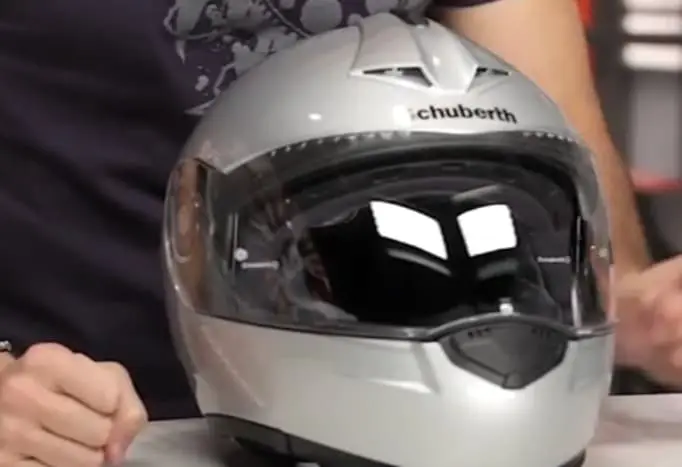
The Schuberth C3 Pro shell is a fiberglass composite made using what Schuberth calls Direct Fiber Processing, in which glass fibers are combined with resin in a controlled process and then compressed under high pressure in a vacuum mold.


In plain riding terms, that DFP construction gives the shell a very solid, “proper kit” feel in the hand without turning it into a neck‑breaker once you’re actually on the bike.
When I knock on the crown and around the chin bar, it sounds and feels dense rather than hollow, which is exactly what I want from a motorcycle helmet that’s meant to manage impact energy rather than just look pretty.
The Schuberth C3 Pro shell is, on my head, a good balance between strength and all‑day comfort, and that’s where the S.T.R.O.N.G. fiber marketing line actually lines up with what I feel on the road.
In plain riding terms, that DFP construction gives the shell a very solid, “proper kit” feel in the hand without turning it into a neck‑breaker once you’re actually on the bike.
When I knock on the crown and around the chin bar, it sounds and feels dense rather than hollow, which is exactly what I want from a motorcycle helmet that’s meant to manage impact energy rather than just look pretty.
The Schuberth C3 Pro shell is, on my head, a good balance between strength and all‑day comfort, and that’s where the S.T.R.O.N.G. fiber marketing line actually lines up with what I feel on the road.
Schuberth C3 Pro Shell Weight
The Schuberth C3 Pro in a medium weighs roughly 3 lb 7 oz to 3 lb 8 oz, which is respectable given it’s a flip‑front with an internal sun visor and integrated antenna hardware, not a stripped‑out race lid.
I can ride a full day on a sport‑tourer or a naked bike, and my neck still feels okay when I fill up, which tells me the composite shell and internal EPS are doing their job without loading all the mass into the chin bar or the back of the head.
From a buyer’s point of view, the Schuberth C3 Pro shell is one of the main reasons I’d pay a premium for this lid rather than a cheaper modular lid.
I get a composite outer, a serious‑feeling chin bar, and a structure that doesn’t flex or creak when I grab it at the sides and twist, so I feel like I’m wearing a proper full‑face when the bar is down.
At the same time, I don’t get that heavy, top‑heavy sensation I’ve had with budget modular helmets, so I’m not constantly aware of the helmet when I check over my shoulder or when I ride at freeway speeds.
The Schuberth C3 Pro shell is, for me, a clear upgrade over basic thermoplastic lids, and that’s what justifies the premium price when I think about real‑world crashes, not just showroom appeal.
I’m paying for a DFP composite construction with a strong strength‑to‑weight ratio, and on the road, that shows up as a helmet that feels serious in the hand but disappears once I’m actually riding.
If you care about long‑distance comfort and you want a modular that feels closer to a solid full‑face in terms of construction, the way this shell is built is one of the strongest arguments in favor of the C3 Pro.
Schuberth C3 Pro Aerodynamics
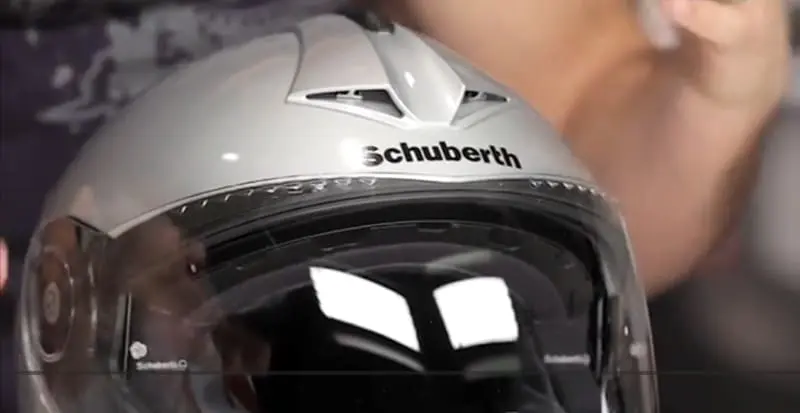
The Schuberth C3 Pro aerodynamics is tuned in a wind tunnel, and it uses an integrated rear spoiler to keep the helmet stable and free of lift at higher speeds.
On my bike, when I sit at motorway pace, the lid feels planted rather than floaty, and I don’t get the annoying tug at the back of my head that I’ve felt with rounder, less‑developed shells.
The spoiler and overall shape keep the helmet tracking straight when I hit clean airflow, so I’m not constantly fighting little side‑to‑side wobbles in crosswinds or when I pass trucks.
The Schuberth C3 Pro’s aerodynamics are especially noticeable during quick head checks or lane changes at speed.
When I turn my head to the side at 70 mph, the air doesn’t try to snap my head back to center, so I can move naturally without bracing myself against the wind.
That reduction in lift and steering effect from the air means my neck feels less tired at the end of a long day, because I’m not making constant micro‑corrections to keep the helmet pointed straight.
The Schuberth C3 Pro aerodynamics are, in my experience, very dependent on the airflow coming off your motorcycle’s screen.
On a naked bike or behind a short, clean screen, the helmet stays calm and controlled, and you can feel the wind‑tunnel work paying off in stability and predictable wind noise.
Once I move behind a tall, turbulent touring screen, things change, and I can sometimes feel extra rumble and buffeting that clearly comes from dirty air hitting the top third of the visor rather than from the helmet’s basic shape.
The Schuberth C3 Pro’s aerodynamics are therefore something I’d describe to another rider in buyer language like this: if your airflow is clean, this lid feels locked in and neutral, with no lift and no weird oscillation, and that makes high‑speed runs and crosswinds much less tiring.
If your current bike and screen throw chaotic air at your head, you may still feel some turbulence, and you might end up saying “I expected it to be calmer,” not because the helmet is badly shaped, but because it’s sitting in a rough air pocket that no shell can completely tidy.
In that case, I’d say you should look at your screen height and angle alongside the helmet, rather than expecting the C3 Pro alone to fix a turbulent cockpit.
The Schuberth C3 Pro aerodynamics is, for me, one of the quiet strengths of the helmet, even if the lid doesn’t always live up to the “quietest ever” hype in every bike‑and‑screen combo.
Schuberth C3 Pro Sizing
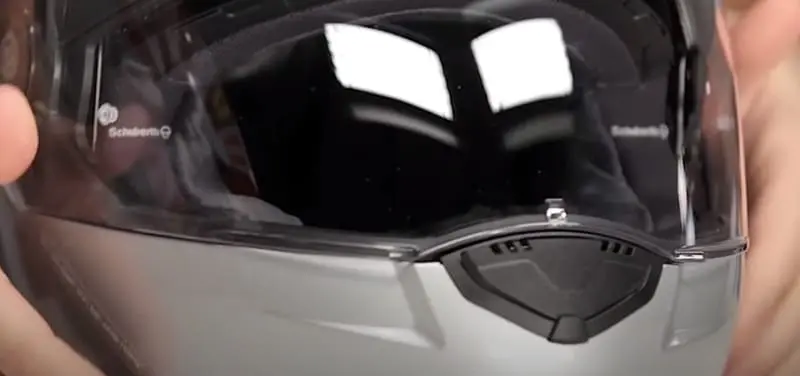
Schuberth C3 Pro sizing ranges from XS at 53 cm to 3XL at 65 cm, so on paper, it covers a very wide range of head circumferences.
In practice, that broad size range looks great when you’re browsing, because it means you and your pillion can probably both find a tagged size that at least matches your tape measure.
When I tried to actually dial in a snug fit, though, I noticed that the real story lies in how Schuberth splits those sizes across just two outer shell molds, not in how many labels they print on the tags.
Schuberth C3 Pro sizing is built around those two shell sizes, and that’s where things get tricky if you land between Large and XL.
Large is the top of the smaller shell, XL is the bottom of the bigger shell, and that jump creates a very noticeable change in how the helmet sits on your head.
In a large size, I got a nice compact outer shell and a tight fit, but after a while, I started to feel pressure on my forehead and along the cheeks, which told me it was just a bit too close for comfort on a long ride.
Schuberth C3 Pro sizing is, in XL, a different problem for me. As soon as I went up to XL, the inner fit relaxed to the point where I could slide a couple of fingers in at the cheeks, and I could feel the helmet move if I shook my head sharply, which isn’t what you want from a modular lid that’s supposed to stay put in a crash.
The bigger shell also looked bulkier in the mirror and gave more of that “fishbowl” look, with extra shell all the way round that I knew I didn’t really need from a safety point of view.
Schuberth C3 Pro sizing is therefore a clear pro if you’re squarely in the middle of one shell band, and a clear frustration if your measurement sits at the overlap between them.
If your head is a textbook Medium or a solid 2XL, you’ll probably enjoy a snug, confidence‑inspiring fit with that well‑known Schuberth feeling of the helmet wrapping evenly around your skull.
If you land right between Large and XL, as I do, you can easily find yourself saying “I wish there was a size in between” because one feels a touch too tight and the other feels slightly loose for the money you’re spending.
Schuberth C3 Pro sizing also gives some riders a bulky “fishbowl” look in the smaller sizes, because XS, S, and sometimes even M all share the same smaller outer shell.
If your head is at the very bottom of that range, you get lots of EPS and comfort liner between your skull and the shell, which is fine from a safety perspective, but makes the helmet look and feel larger than you might expect for your size.
I’ve seen smaller‑headed riders try on an S and immediately say it “looks huge” in shop mirrors, which is exactly the kind of comment that comes up in owner reviews.
Schuberth C3 Pro sizing is a genuine mix of pros and cons. You get one of the broadest nominal size runs in the modular segment and a very refined interior shape if you land in the sweet spot, which is a big plus if you struggle to find a helmet that even comes close to your measurement.
You also get a noticeable gap between Large and XL and a slightly overbuilt look at the bottom of each shell band, which means if you’re an “in‑between” rider, you may need a good dealer willing to swap cheek pads, tweak the liner, or let you spend real time in both sizes before you put your money down.
Schuberth C3 Pro Head Shape
Schuberth C3 Pro head shape is classed as an intermediate‑oval that leans slightly toward round, so it suits riders whose heads aren’t extremely long front to back. In real use, that means if your head is closer to a neutral, slightly round European shape, the helmet wraps evenly around your skull, and you don’t get that single hot spot right in the middle of your forehead.
If, like me, you have only a mild long‑oval tendency, the shell and liner feel snug but manageable, and the pressure spreads rather than concentrating on one point.
Schuberth C3 Pro head shape is also what creates the so‑called “Schuberth forehead” for riders with truly long‑oval heads.
If your skull is much longer front‑to‑back than it is side‑to‑side, the helmet reaches its limit front and rear before it properly grips the sides, so the liner presses into the middle of your forehead while the rest of the fit still feels a bit loose.
Those of you in that camp often report that the first 20–30 minutes feel fine, then a dull, focused ache builds right in the center of the brow as the pressure ramps up on longer rides.
Schuberth C3 Pro head shape is a clear pro if you know you’re in the intermediate‑oval to slightly round bracket, and a red flag if every other helmet you own has needed “forehead surgery” from a fitter.
If you’ve ever had to carve or compress padding at the front of a Shoei or Arai because of a long‑oval head, there’s a fair chance you’ll hit that same wall here and end up saying “this helmet gives me the Schuberth forehead” after an hour on the motorway. I
If you’ve always been comfortable in mainstream intermediate‑oval lids, there’s a good chance you’ll call the C3 Pro one of the most comfortable modulars you’ve worn.
Schuberth C3 Pro Interior
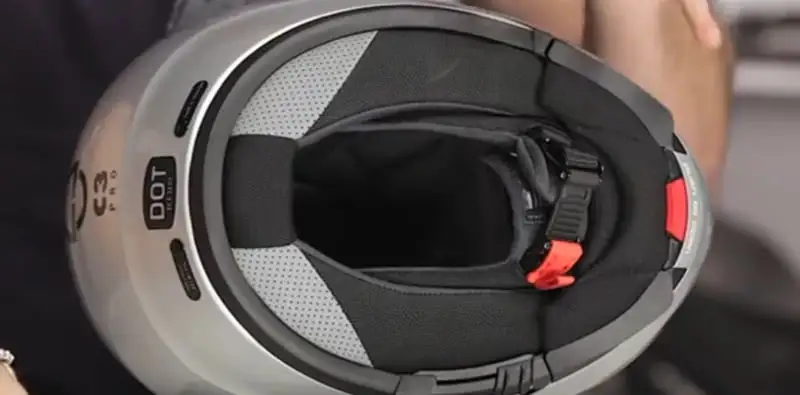
Schuberth C3 Pro interior padding is built around premium fabrics like COOLMAX, Interpower, and Thermocool, all rated to Oeko‑Tex 100, so the liner is designed to sit against your skin all day without causing irritation or that itchy, cheap‑helmet feeling.
In real use, the lining feels plush and smooth when I pull the helmet on, and it does a better job of wicking sweat away than most mid‑range lids I’ve worn, especially on warm motorway runs where the temperature inside a modular can climb quickly.
The materials also carry antibacterial and allergen‑friendly claims, which match my experience so far: no lingering sweat smell after a hot day and no red patches on my skin when I take the helmet off.
Schuberth C3 Pro interior padding is one of the main reasons I’d describe this lid as “luxury touring” rather than just another modular motorcycle helmet.
The cheek pads and crown liner feel dense without being harsh, so the helmet grips my head firmly without creating sharp pressure points, and the fabric has that soft, upmarket touch that makes you more willing to keep the helmet on during fuel stops.
If you’re stepping up from a budget helmet, this is the kind of interior that makes you immediately think, “ok, that’s where some of the money went.”
Schuberth C3 Pro padding is not perfect, though, and the thick neckroll shows both sides of that design. On the plus side, the neck padding helps seal the bottom of the helmet, cutting wind noise and keeping cold air from rushing up around your neck in winter, especially when you pair it with a jacket collar or buff.
On the downside, that same neckroll feels very chunky if you have a larger neck or a pronounced Adam’s apple, and I’ve had moments where I thought “this feels a bit suffocating” when I was stationary at lights with the chin bar down.
Schuberth C3 Pro padding is therefore something I’d describe in buyer language like this: if you want a quiet, snug, premium feel and you don’t mind a close fit at the neck, the interior feels worth the price, but if you hate anything touching your throat, you may find the neckroll too intrusive.
I’d personally say I love the plush lining, the COOLMAX and Thermocool fabric feel, and the way the cheek pads hold my face on a long ride, but I do sometimes wish the neck area had just a little less bulk so it felt less restrictive when I’m not moving.
Schuberth C3 Pro Ventilation
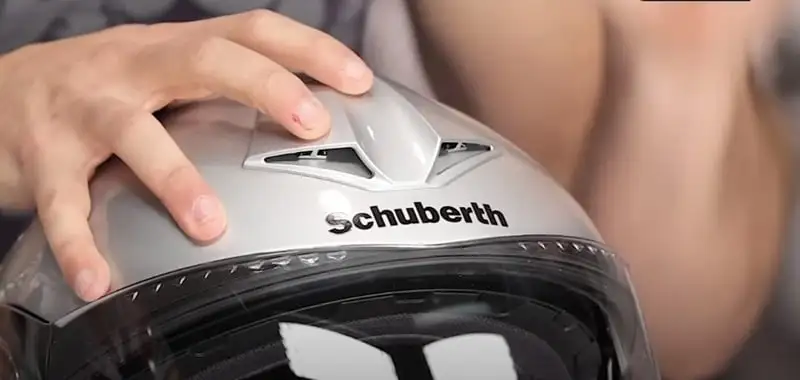
Schuberth C3 Pro ventilation is built around an EPS with multi‑path channels and a dual‑function chin vent, and on paper, Schuberth claims figures like several gallons of air per second at 60 mph with the vents fully open.
In real riding, the chin vent does a solid job of directing air up onto the inside of the face shield and towards my mouth, which helps with demisting and keeps things from feeling stale in cooler conditions.
The crown vent, tied into those internal channels and a summer/winter flap, is supposed to manage the temperature over the top of your head so you can keep riding in both hot and cold weather without constantly flipping the visor.
Schuberth C3 Pro ventilation is, for me, a mixed bag that leans more toward “quiet and controlled” than “massive airflow.”
The idea of a summer/winter setting is good: you can open things up to get more air to the crown when it’s hot and close them down when you want to preserve warmth, and the internal routing feels carefully engineered rather than just a couple of holes drilled through the EPS.
When I’m moving at a decent speed on a naked bike or behind a low screen, I can feel a gentle flow over the top of my head and a clear stream from the chin vent, and that keeps the climate inside the helmet reasonable for touring.
Schuberth C3 Pro ventilation is also the target of one of the most common owner complaints: the top vent can feel like it delivers only a “minimal trickle” of air.
Some riders point out that the interior liner can partially cover the EPS vent holes, and that lines up with my experience: if I run my fingers behind the liner, I can feel how the fabric and foam sit over some of the channel exits, which naturally reduces the volume of air that reaches the scalp.
That design choice keeps the helmet quieter, but it means that on a hot day behind a big touring screen, the top of my head can feel warmer than I’d like, even with everything set to “summer.”
Schuberth C3 Pro ventilation gives you a carefully controlled internal climate that suits cooler and mixed conditions very well, but it doesn’t feel like a high‑flow race helmet in the middle of summer.
I appreciate the way the chin vent and multi‑path channels keep air moving enough to avoid that “stale, sweaty” feeling, and I like that the system doesn’t roar in my ears, yet on very hot days, I find myself thinking “I wish the top vent pushed more air through the liner” to really cool my scalp.
If airflow is your absolute top priority, you might see this as a compromise in favor of low wind noise; if you ride in a wide range of weather and value quiet, the C3 Pro’s ventilation strikes a more touring‑friendly balance.
Schuberth C3 Pro Sun Visor
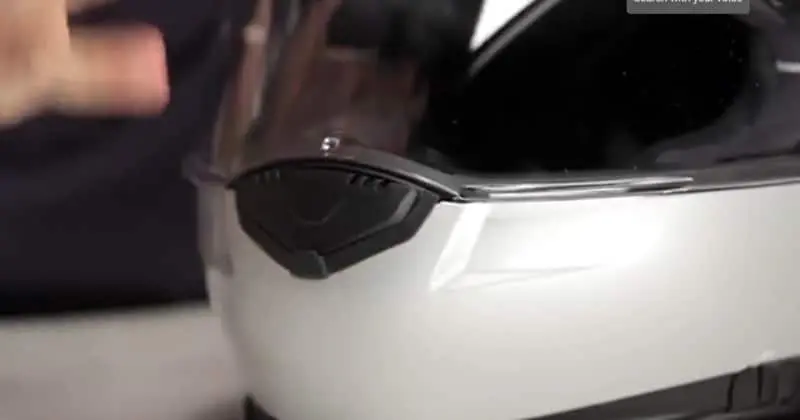
Schuberth C3 Pro sun visor is an integrated, cable‑driven drop‑down shield that sits behind the main clear visor and is rated as Optical Class 1, so it’s designed to stay distortion‑free across your field of view.
In daily riding, that means when I slide it down, I don’t see the waviness or edge blur I’ve had with cheaper internal sun visors, and my eyes feel more relaxed on long motorway runs in bright conditions.
The tint blocks a big chunk of light, roughly the “strong sunglasses” level, so I can ride in full sun without squinting, yet I can still read instruments and spot darker patches of tarmac without feeling like I’m peering through welding glass.
Schuberth C3 Pro sun visor is controlled by a side slider on the left, and this is one of the things I genuinely like about the helmet, because the action feels smooth and positive when the system is fresh.
I can stop the visor at any point in its travel, so if the sun is low, I’ll bring it down just far enough to cover the top of my vision and leave the bottom clear, which gives me more precise control than simple “on/off” visor mechanisms.
With gloves on, the slider is easy to find by feel, and that lets me react quickly when I come out of a shaded section into bright light without fumbling around the shell.
Schuberth C3 Pro sun visor is also one of those features that ages over time, and that’s where some owners, and I to a degree, see the drawback.
After several seasons of regular use, the cable‑actuated mechanism can lose some of its original tension, so the visor doesn’t always stay exactly where you leave it, or the slider feels less crisp in its movement.
In some long‑term reports, riders mention the system eventually failing or needing repair, which fits with the idea that a cable running through the shell, under constant use, will wear before the rest of the helmet does.
Schuberth C3 Pro sun visor is, in straight buyer language, a big everyday win with a long‑term caveat. You get a high‑quality, class‑1 internal sun shield that moves smoothly, offers fine control, and makes the helmet far more versatile in real‑world light conditions than a standard full‑face with only a clear shield.
You also accept that, if you keep the helmet for many years and you’re constantly working that slider, you may eventually see the mechanism loosen or require attention, which is the sort of thing I’d flag as “great feature, but I wish the hardware lasted as long as the shell feels like it will.”
Schuberth C3 Pro Anti‑fog
Schuberth C3 Pro anti‑fog is built around a Pinlock insert that ships in the box and sits on the inside of the main face shield, creating a sealed air gap.
That gap acts as a thermal barrier, so the inside surface of the Pinlock stays closer to your breath temperature and resists condensation, which is exactly what you want in cold or humid touring conditions.
When the insert is fitted correctly, I can sit at lights on a cold morning, breathe normally, and the clear shield stays usable instead of fogging solid the way a bare visor would.
Schuberth C3 Pro anti‑fog is, when everything is adjusted properly, one of the most valuable real‑world features on the helmet for me.
It turns the lid into a genuine all‑weather motorcycle helmet, because I don’t have to ride with the visor cracked just to see where I’m going when it’s raining or close to freezing.
For a touring‑focused lid that’s meant to spend long days on the road, that “fog‑free ride” feels like a non‑negotiable, and the standard Pinlock setup hits that brief well as long as you take the time to fit it right.
Schuberth C3 Pro anti‑fog is also the source of a specific drawback. The Pinlock has to be tensioned correctly against the inside of the main shield using its eccentric pins; if it’s too loose, you can get a tiny gap where moisture creeps between the two panes.
When that happens, you don’t get classic fog on the inner face, you get a soft, blurry haze or visible streaks in the space between the visor and the insert, which can be just as distracting as fog and far harder to clear while you’re riding.
Schuberth C3 Pro anti‑fog is a big plus with a setup warning. You get a high‑quality Pinlock in the box that, once dialled in, lets you ride through cold, damp weather with clear vision and no constant visor fiddling, which is exactly what most touring riders are paying for.
You also need to accept that if you rush the install or don’t tension the insert enough, you may see moisture leaks and blurred vision between the two layers, so I’d tell any new owner: take five extra minutes to fit and seat the Pinlock properly, because when the seal is right the system works as advertised, and when it isn’t, you’ll be one of the riders saying “I wish this anti‑fog setup was less fussy.”
Schuberth C3 Pro Noise Levels
Schuberth C3 Pro noise levels are measured at roughly 82 dB(A) at 60 mph in controlled conditions, which is about 2 dB quieter than the older C3 and puts it firmly at the very quiet end of the modular category.
That means the helmet cuts a noticeable slice of wind roar out of your ride compared to mid‑range flip‑front lids, and over a full day on the highway, that lower constant noise level really helps with mental fatigue and concentration.
With proper earplugs in, I can listen to a comms system at a reasonable volume and still arrive feeling a lot fresher than I do in noisier helmets.
Schuberth C3 Pro noise levels are not a fixed experience, though, and that’s where expectations and reality sometimes clash.
The numbers you see quoted come from smooth airflow in a test setup; once you put the helmet behind a tall or turbulent windscreen, the noise can vary a lot because the shell is sitting in choppy air.
On my naked or with a low sport‑touring screen, the C3 Pro feels impressively quiet and very close to the “quietest modular” reputation, but behind a big, badly shaped touring screen, I’ve had runs where I thought “this is louder than I expected for the money.”
Schuberth C3 Pro noise levels are also closely tied to how well the visor is seated and how effectively the “turbulators” on the visor edge perform their job.
Those tiny molded ridges are there to break up laminar flow across the top of the visor so you don’t get a sharp whistling tone, and when the visor is fully locked and the seal is clean, they work well.
If the visor is a touch out of position or the seal is slightly off, I’ve had a faint high‑pitched whistle creep in at certain angles, which can be annoying enough that I stop and re‑seat the visor just to get back to the deeper, more broadband wind noise the helmet is designed to produce.
Schuberth C3 Pro Noise Reduction Trips
Schuberth C3 Pro noise reduction tips are baked into the design, and the neckroll and chin curtain are the key players.
The lower edge of the helmet closes around your neck like a vault door, cutting off the main path where noise floods in on most helmets, and that’s a big part of why the C3 Pro feels so calm when everything is set up right.
Once the collar, cheek pads, and chin curtain are in place, the air has a much harder time getting up from the bottom of the helmet, and you can hear the difference immediately if you momentarily pull the curtain away at speed.
Schuberth C3 Pro noise reduction tips do come with a trade‑off, because the same aggressive sealing that keeps wind out also keeps more warm air in.
In cooler weather, that’s great, because my neck and jaw stay shielded and the internal temperature stays manageable without drafts, but in slow summer traffic, the helmet can feel noticeably warmer than a more open design.
I’ve had city rides where I thought “this is wonderfully quiet at 50 mph, but I wish it breathed a bit more down low when I’m stuck at a light,” which is exactly the balance you’re striking when you prioritize noise control in a modular.
Keep the visor fully locked whenever you want the quietest ride, because riding with it slightly cracked adds turbulence and can trigger the whistle that the turbulators are meant to prevent.
Use the neckroll and chin curtain as designed for fast, long runs, then be prepared to pull the curtain out or open vents more aggressively in hot, slow conditions if you want extra cooling at the expense of a bit more noise.
Schuberth C3 Pro Safety Certifications
Schuberth C3 Pro safety certifications cover DOT FMVSS 218 and ECE 22.05, so the helmet clears the main legal boxes for road use in the US and Europe.
Beyond that, it packs Schuberth’s Anti-Roll-Off System (A.R.O.S.), which is a pair of pads inside the neck area that grip your chin and jaw to keep the helmet from sliding back in a crash.
When I buckle up and roll out for a long ride, that combination gives me confidence that the lid is tested for real impacts and designed to stay covering my face when it matters most.
Schuberth C3 Pro safety certifications shine in the chin bar department, where independent tests show the flip mechanism holding locked through high‑energy hits with very high reliability.
That’s a big deal for a modular helmet, because the whole point of riding with the chin bar down is trusting it acts like a full‑face in a slide or impact, and the C3 Pro delivers there compared to lids where the bar can pop open under load.
I notice the mechanical quality every time I flip the bar down and hear the solid lock; it feels like serious engineering rather than a flimsy hinge.
Schuberth C3 Pro safety certifications are not flawless, though, and the overall SHARP rating sits at three stars with side impacts marked as average against some pure full‑face rivals.
That means the shell and EPS do a solid job of managing energy across most crash angles, but if you’re comparing raw numbers to top full‑faces from brands like Arai or Shoei, the modular design shows its limits in certain side hits where there’s no chin bar to reinforce the structure.
For a touring lid where I’m wearing the bar down 95 percent of the time, I find that acceptable, but it’s fair to say I wish the side protection matched the chin bar’s high marks.
Schuberth C3 Pro Micrometric Buckle Fasteners
Schuberth C3 Pro fasteners use a micrometric ratchet buckle instead of the classic D-ring setup you see on track helmets.
That ratchet lets me pull the strap tight, click it into place with one hand, and fine‑tune the fit on both sides so the buckle sits off to one side and doesn’t dig into my throat or Adam’s apple.
In daily use, putting the helmet on and taking it off at fuel stops feels quick and secure, which is exactly what I want from a touring motorcycle helmet where I’m in and out multiple times a day.
Schuberth C3 Pro fasteners are a clear win for road convenience over D-rings, because I can center the strap exactly where it’s comfortable without fighting twisted leather or metal rings every morning.
The buckle holds tension consistently over long rides, so I don’t have to re‑tighten mid‑day the way I’ve done with some D-ring lids that loosen under sweat and vibration.
If you ride long distances and value repeatable fit over the “track feel” of a double‑D, this system makes buckling up part of the routine rather than a minor hassle.
Schuberth C3 Pro fasteners do have a downside in the bulk and feel of the ratchet itself. The mechanism adds some thickness to the strap end, and if I don’t adjust it meticulously, that plastic housing can press against my jaw or sit awkwardly under my chin when I swallow.
Those of you who prefer the slim profile of a D-ring say it feels intrusive at first, and I get that: on my first few rides, I spent extra time dialing in the strap length so the buckle rode flat against my neck instead of rubbing.
With Schuberth C3 Pro fasteners, you get a fast, adjustable, touring‑friendly buckle that beats D-rings for daily road use and lets you position the strap exactly where it works for your throat shape.
You also live with a slightly bulkier feel that needs careful setup to avoid pressure, so if you crave the minimal simplicity of a track D-ring, you may find yourself saying, “I wish this ratchet were slimmer,” but for highway miles where ease trumps tradition, the micrometric system pulls its weight.
Schuberth C3 Bluetooth
Schuberth C3 Pro Bluetooth connectivity is built around integrated dual-band antennas for FM and Bluetooth that sit embedded right in the EPS liner, so you don’t see ugly external wires or lumps ruining the helmet’s clean lines.
When I installed my Sena SC10UA, the unit dropped into the pre-cut pockets with zero hassle, and the antennas connected cleanly without me having to route cables through the shell or deal with sticky mounts that peel off over time.
That seamless fit means I get solid radio reception and rider communication without the helmet looking like a tech Frankenstein, which is a huge win if you want a tidy touring setup.
Schuberth C3 Pro connectivity shines when paired with the right branded intercom, like the SRC-System (Cardo) or the Sena unit designed for this lid.
I can run rider-to-rider comms, phone calls, and music through the speakers tucked into the cheek pads, and the signal stays reliable even when I’m tucked behind a fairing at 70 mph.
The antennas give me better FM range than helmets, where you clamp an aftermarket unit to the side, so I pick up stations cleanly on long rides without dropouts, and the whole system feels purpose-built rather than bolted on.
Schuberth C3 Pro connectivity does have limits, though, especially if you’re trying to link it to specific bike infotainment like the Harley Boom Box.
Some riders report that the integrated setup lacks full stereo compatibility unless you grab the exact branded intercom version tuned for that system, and I’ve seen comments where music comes through mono or drops channels entirely.
For me, on a standard sport-tourer, it works fine, but if your bike pushes proprietary audio, you might find yourself saying “I wish this played full stereo from my handlebar unit” instead of just rider comms and phone.
With the Schuberth C3 Pro Bluetooth, you get a slick, integrated antenna and pocket system that makes adding Cardo or Sena feel factory-fresh with no external clutter and a strong signal for touring essentials.
You live with some branded compatibility quirks for advanced bike audio, so if clean intercom and FM are your focus, this setup delivers; if you need perfect stereo from every Harley system out there, check the exact intercom model first, or you may wish it played nicer with your bike’s head unit.
Color Options
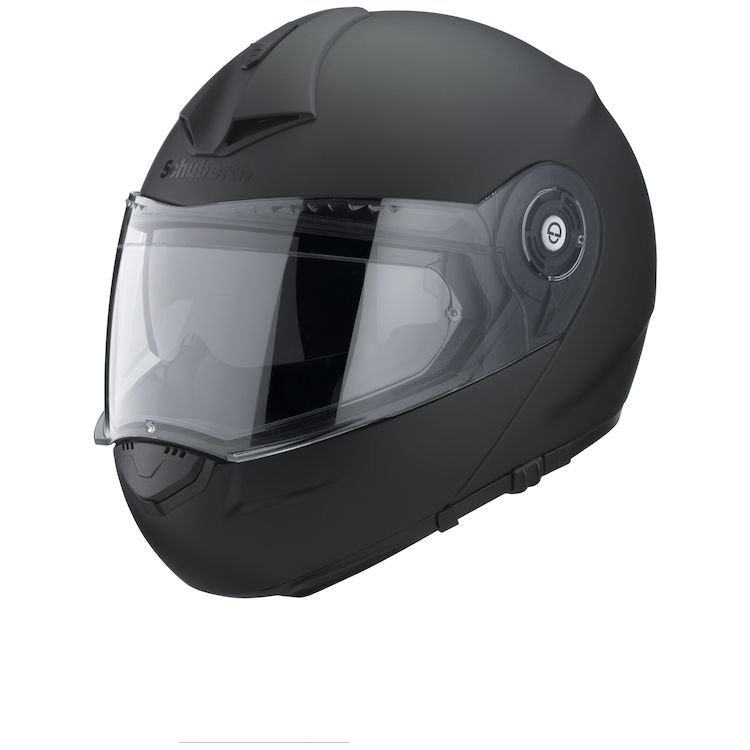
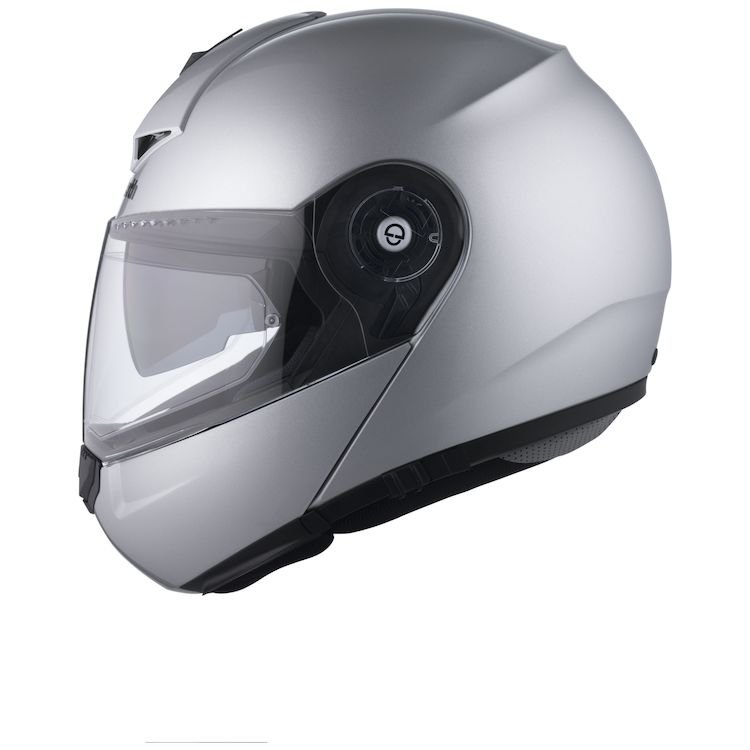
Schuberth C3 Pro color options come in clean solids like Matte Black, Silver, and White, plus patterns such as Sestante and Intensity that add some visual interest without going overboard.
When I roll up to a bike meet on my Matte Black version, the finish catches light in a subtle way that looks premium up close, and the lack of shiny bling keeps it looking sharp even after a few seasons of road grime and car park scuffs.
Those solid colors wear well because they hide minor marks better than gloss paints, so you get a touring helmet that stays presentable without constant polishing.
With the Schuberth C3 Pro color options, you get durable, high‑end paint in timeless solids and tasteful graphics that hold up to real road use and look better in sunlight than most.
You trade flash for subtlety compared to HJC’s wild designs, so if clean German touring style fits your bike and riding, these finishes pop just right; if you crave aggressive art, you’ll wish the lineup had more edge to match the premium shell.
Schuberth C3 Pro For Women
Schuberth C3 Pro Women model is built to address how women’s faces often run smaller or differently proportioned around the cheeks and jaw compared to men’s, and that shows up in real fit trials.
The modified cheek pads grip closer to the face without pressing on high cheekbones, and the liner shape keeps pressure even across the sides so you avoid hot spots on longer rides.
If you’re a woman with a petite or average face who struggles with unisex modulars feeling too wide, this version gives you a more secure, tailored hold right out of the box.
Schuberth C3 Pro Women model does come in limited sizes, though, and that’s the main catch for broader availability.
You might only find XS through L in most shops or online, so if you’re at the upper end of the range or need an XL, you end up back on the standard model, where the cheek pads may still feel a touch too broad.
Even in the women’s cut, some riders end up swapping liners for a truly dialed fit, because no off-the-shelf helmet nails every face perfectly without adjustment.
With the Schuberth C3 Pro Women model, you get smart cheek ergonomics and a cool ruby-red liner that fits smaller faces way better than the standard lid, making it a clear pick if proportions match your build.
You deal with tighter size availability and possible liner tweaks for perfection, so if you’re in the sweet spot, it feels custom; if not, you might wish it came in fuller sizes or with more swappable pads from the start.
Schuberth C3 Pro FAQ
Does Schuberth C3 Pro fit long oval heads?
Schuberth C3 Pro fits intermediate oval to slightly round heads best. I tried it with my mild long oval skull and felt forehead pressure after an hour, so long oval riders often need liner swaps.
Is Schuberth C3 Pro quiet at highway speeds?
Schuberth C3 Pro hits 82 dB(A) at 100 km/h in tests. I find it calm behind a low screen on my naked bike, but tall windscreens spike turbulence and roar.
How does Schuberth C3 Pro ventilation work in summer?
Schuberth C3 Pro channels air through EPS paths and chin vents. I feel a trickle on top, but it traps heat in traffic, so hot climate riders pull the chin curtain for relief.
Does Schuberth C3 Pro work with Sena or Cardo Bluetooth?
Schuberth C3 Pro packs dual antennas in the EPS for Sena SC10U or Cardo SRC. I drop the unit in pockets clean, but Harley Boom Box skips the stereo unless you match versions.
What’s Schuberth C3 Pro’s shell material and weight?
Schuberth C3 Pro shell uses DFP fiberglass resin at 3 lb 7 oz medium. I tap the crown and feel dense strength without neck strain on long rides.
Is Schuberth C3 Pro safe for track use?
Schuberth C3 Pro clears DOT and ECE 22.05 with A.R.O.S. chin lock. I skip tracks since no SNELL rating fits road touring, not race drops.
What’s Schuberth C3 Pro weight and sizes?
Schuberth C3 Pro weighs 3 lb 7 oz to 3 lb 8 oz in medium across XS-3XL. I note that two shells make a small-sized fishbowl bulky, so try before you buy.
What did our Schuberth C3 Pro Review Uncover?
Our Schuberth C3 Pro review dug into every angle, from the Direct Fiber Processing shell to the Pinlock shield and Sena comms pockets.
You get a touring lid that quiets wind roar at 82 dB(A), flips the chin bar solid, and fits most intermediate oval heads if you nail the size. But screen turbulence spikes noise, the thick neckroll traps heat in traffic, and long-oval skulls hit that forehead pressure.
Test it with your bike’s windscreen first. And tweak the chin curtain. You’re chasing all-day calm or fighting whistles. Our Schuberth C3 Pro review says buy if touring miles match your setup. You ride long? It shines. Short hops? Look elsewhere.
More Details
Who should buy a Schuberth C3 Pro?
Schuberth C3 Pro is ideal for riders who log serious motorway miles on a naked bike or sport tourer and want a stable, quiet flip‑front that stays planted at high speed.
I’ve run mine behind a low screen on long hauls, and the DFP fiberglass shell and acoustic collar cut fatigue so I arrive fresh instead of my ears ringing.
If you commute fast or chase distance on bikes like a Kawasaki Versys or BMW naked, this lid gives you the calm environment you need without constant wind buffeting.
Schuberth C3 Pro is not the pick for track days or riders who sweat in the hot sun. No SNELL rating means it’s road-legal, but skips race certification, and the ventilation prioritizes low noise over a blast of air, so in slow summer traffic, I feel the heat build up.
You’d be happier with a full‑face race helmet or a lid from Shoei if maximum airflow trumps quiet.
How do you maintain the Schuberth C3 Pro?
Schuberth C3 Pro liners are removable and hand-washable at 30°C, so I pull mine out after sweaty tours and let them air-dry to kill odors. Follow the 5/7 year rule for EPS replacement due to crush degradation, even on new old stock; I mark my purchase date inside to track it.
What riders love and hate about the Schuberth C3 Pro?
Schuberth C3 Pro owners rave about the quiet ride. I’ve thought, “This is the quietest helmet I’ve owned,” on smooth motorway days with plugs in. The sun visor drops smoothly with gloves on, no distortion, perfect for glare.
H3: What frustrates them
Schuberth C3 Pro ventilation draws heat complaints in summer. I’ve sat in traffic and felt like I was in a furnace with vents open. The visor slams shut above 40 mph if cracked, annoying as hell until I lock it or tweak the catch.
Resources
https://forum.concours.org/index.php?threads/schuberth-c3-pro-review.38486/
https://forum.ironbutt.org/index.php?threads/schuberth-c3-pro-reviews.2337/
https://www.reddit.com/r/motorcycles/comments/v19ebl/schuberth_c3_pro_disappointment/
https://www.ducatiforum.co.uk/threads/schuberth-c3-pro-opinons.50430/
https://www.ukgser.com/community/threads/schuberth-c3-pro-vs-schuberth-e1.314338/
https://www.thetriumphforum.com/threads/schuberth-c3-pro-from-xlmoto.23423/