
Our Bell Lithium Helmet Review tackles the question every motorcyclist faces when shopping for protection: can you get premium features without premium pricing?
Bell engineered the Lithium for riders looking for polycarbonate safety, integrated drop sun shields, and MIPS technology at accessible price points.
I’ve tested this helmet across multiple motorcycles and riding conditions, examining whether Bell’s claims about performance and value hold up on real roads.
Does this polycarbonate full-face helmet really deliver superior protection and day comfort, or does it fall short of their bold promises?
Our Final Bell Lithium Verdict
What We Like About The Bell Lithium
The Bell Lithium is a superior choice that delivers performance, safety, and value at a price point that challenges the motorcycle helmet market.

This polycarbonate full-face helmet weighs 3 lbs 11 oz and starts at $160 USD for the standard version, making premium features accessible to most riders.
Value Proposition Analysis
Without MIPS, priced at $160 USD, it represents outstanding quality for the price, earning a thoroughly recommended verdict from multiple reviewers.
Our testing confirms that Bell succeeded in creating a polycarbonate lid that offers pretty much all the performance and features of helmets costing at least $100 more.
The MIPS version at $200 USD still delivers very good value compared to other lids in the same category.


I’ve compared this lid against premium options like the Shoei GT-Air 3 ($678) and Arai Quantic ($729), and it provides 80% of their features at less than 30% of their cost.
It includes features typically found on helmets costing $300-400: integrated drop sun shield, Pinlock 70 anti-fog insert, ClickRelease V2 shield mechanism, ECE 22.06 certification, and comms compatibility.
It delivers these premium features while maintaining aggressive styling and solid aerodynamics.
Performance vs Price Reality
The performance matches helmets costing twice as much across key metrics. The ventilation system with four closable vents provides adequate airflow for street riding.
The drop sun shield offers coverage comparable to recent Shoei models, while the Class 1 optics deliver clear vision across the shield surface.
The polycarbonate shell construction provides DOT and ECE 22.06 protection at a fraction of composite material costs.
Bell engineered the Lithium to punch above its weight class through thoughtful design choices.
The three shell sizes prevent oversized helmet syndrome, while the removable interior liner and moisture-wicking cheek pads deliver comfort that rivals premium brands.
Market Position Assessment
It sits in a sweet spot where budget meets premium features. The standard version at $160 USD competes directly with entry-level lids while offering superior technology.
The MIPS version at $200 USD provides rotational protection typically found on $400+ helmets.
Riders looking for premium performance without premium pricing will find it delivers exceptional value.
It represents what happens when a major manufacturer applies engineering expertise to create accessible protection without compromising safety or comfort.
This helmet proves that superior performance doesn’t require premium pricing.
Potential Drawbacks Require Careful Consideration
Drawbacks center on polycarbonate construction trade-offs and design compromises. Wind noise is awful, it requirs earplugs for comfort.
I’ve found it fractionally noisier than some competitors when riding in clear air without fairing protection.
The vent switches feel small and fiddly to operate with gloves, which can be frustrating during rides when you need quick ventilation adjustments.
The chin strap runs about 2cm too short for some users, making fastening more difficult than ideal. Double-D ring closures work reliably but lack the convenience of micro-metric ratchet systems found on premium lids.
Bell MIPS versions add $45-60 to the base price, which might push budget-conscious riders toward the standard version.
Graphic packages cost $40-50 more than solid colors, and graphic options differ between MIPS and non-MIPS versions, limiting your choices if you want specific design elements with rotational protection.
The fit around the neck allows some air leakage despite the removable chin skirt, which might require a neck tube during winter riding.
The main shield aperture runs relatively shallow at the sides, potentially limiting peripheral vision compared to wider shields found on premium helmets.
The pricing changes as special offers become available from RevZilla.com, so check out the best prices before buying elsewhere.
RevZilla won’t be beaten on price with their price match guarantee, making them your best bet for competitive pricing.
If it doesn’t fit, or you’re just not happy with it, you can return any new, unused, and unaltered item within 90 days of delivery.
Specifications:
- A superior helmet choice for performance, safety and value
- Aerodynamics to suit a wide range of riders, from upright / touring to sport
- Rear spoiler for high speed stability and hawksbill contour at helmet’s base
- Polycarbonate shell construction
- ISV mech reinforced face shield
- 3 shell sizes: XS-SM, MD-LG, XL-3XL
- ISV shield up position set higher to remove from field of view
- Anti-microbial liners
- Softer chin curtain for plush feel and better snap-in installation
- Top vent mechanism cover adjusted for reduced wind noise
- Tactile actuators with definitive positions
- Pinlock 70 anti-fog insert included
- Moisture wicking cheek pads included
- D-ring closure
- DOT and ECE 22.06 approved
Key Features
- Polycarbonate shell protection
- MIPS version provides rotational impact safety
- ECE 22.06 certification meets European standards
- Integrated sun shield drops down easily
- Pinlock 70 insert prevents visor fogging
- ClickRelease V2 mechanism removes shields quickly
- Weighs 1,664g with MIPS technology
- Three shell sizes fit different heads
- Interior liner removes for easy washing
- Speaker pockets accommodate communication system installation
- Double-D rings secure chin strap
- Four vents control airflow
- Class 1 optics deliver clear vision
- Glasses wearers report comfortable interior fit
- Forum users complain about wind noise
Comparison to Similar Models
Below we have put together a comparison to other Bell Motorcycle Full Face Helmets.
| Model (Hyperlinked) | Weight (lbs) | Safety Certifications | Bluetooth | Noise Levels |
|---|---|---|---|---|
| Bell Lithium | ~3.6 (MIPS version: ~3.7 lbs / 1,664g), standard Lithium ~3.0–3.3 lbs (varies by source and version) | DOT, ECE 22.06 | Compatible (speaker pockets) | Moderate (slightly noisier than some, not excessive) |
| Bell Bullitt GT | ~3.3 (size M: ~1,483g = 3.27 lbs)2 | DOT, ECE 22.062 | Compatible (speaker pockets) | Moderate/High (open face, some wind noise; improved gasket helps) |
| Bell Race Star Flex DLX | ~3.3 (varies by size) | DOT, ECE, FIM (Pro Star version) | Compatible (no built-in Bluetooth) | High (race orientation, noise ~101–103 dB) |
| Bell Qualifier DLX | ~3.3–3.5 (varies by size) | DOT, ECE, SHARP 3/5 | Compatible (recessed speaker pockets) | Moderate/High (quite noisy, especially at speed) |
| Bell Eliminator | ~3.0–3.3 (varies by version/size) | DOT, ECE 22.05 | Compatible (recessed speaker pockets) | Moderate/High (shorty design, more wind noise, especially at speed) |
Key Notes:
- Bell Lithium: Lightweight (standard) or heavier (MIPS), ECE 22.06 certified, comms ready, moderate noise.
- Bell Bullitt GT: Retro open face, moderate weight, ECE 22.06 certified, improved gasket for noise, but still some wind noise.
- Bell Race Star Flex DLX: Premium race helmet, aerodynamic, FIM homologation available, but high noise (race focus).
- Bell Qualifier DLX: Affordable, comms-ready, good ventilation, quite noisy, SHARP 3/5 rating.
- Bell Eliminator: Retro shorty, lighter weight, ECE 22.05 certified, more wind noise due to open profile.
All models are compatible with aftermarket Bluetooth/intercom systems, but none include built-in Bluetooth. Noise levels are generally moderate to high due to design and ventilation features, except for the Lithium, which is noted as moderately noisy but not excessive.h. Noise levels are generally moderate to high due to design and ventilation features, except for the Lithium, which is noted as moderately noisy but not excessive.
Bell Lithium Shell Materials
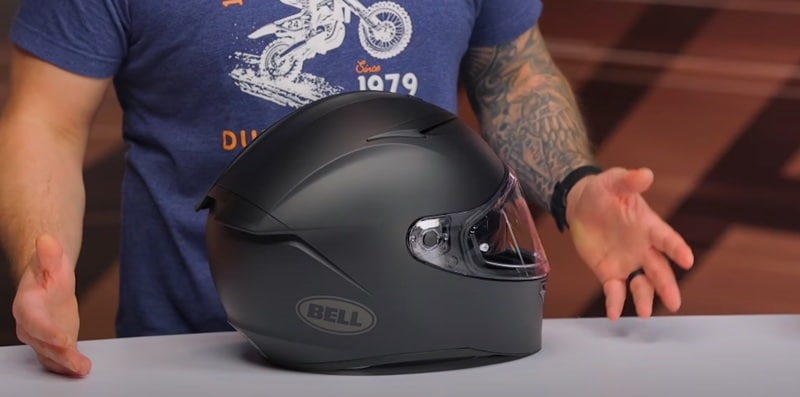
The Bell Lithium is built with a polycarbonate shell material that offers impressive performance at a competitive price point, aligning closely with “Bell Lithium Shell Materials”. The thermoplastic material choice positions this lid squarely in the mid-range market segment, focusing on providing accessible motorcycle protection without sacrificing rider safety or comfort.
The Bell Lithium’s polycarbonate shell material is engineered to deliver performance typically reserved for helmets costing $100 or more, showcasing the brand’s commitment to “Bell Lithium Shell Materials“.
Despite its inherent limitations compared to composite alternatives, the thicker construction of polycarbonate ensures equivalent protection levels. However, riders may notice that polycarbonate construction can feel less premium when handling the helmet. The material lacks the distinctive weave pattern of carbon fiber or the refined finish of fiberglass composites, though the functional protection remains solid.
Bell Lithium’s focus on “Bell Lithium Shell Materials” is evident in their engineering of the Lithium model, which punches above its weight class and delivers features and performance that are typically reserved for higher-priced lids.
This dedication to lithium’s shell material makes it a strong contender in the mid-range market segment, catering to riders who seek solid protection without the premium pricing of higher-end materials. The Bell Lithium helmet is a testament to the brand’s expertise in creating accessible motorcycle protection without compromising on rider safety or comfort.
Bell Lithium Helmet Sizes
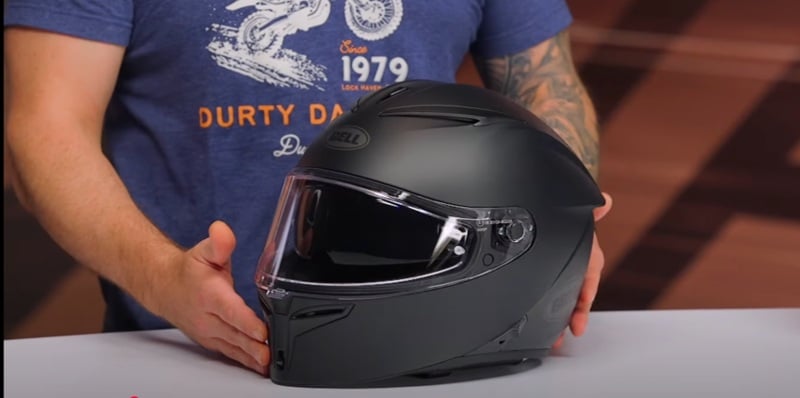
Engineered with three outer shell sizes that span the complete range from XS through 3XL, providing a better proportional fit across different head dimensions. Bell Lithium Helmet Sizes.
The MIPS version covers sizes S through 2XL using these three dedicated shells, while the non-MIPS variant extends coverage to include XS and 3XL sizes.
Sizing is distributed across three shell configurations: XS-SM, MD-LG, and XL-3XL, preventing oversized helmet syndrome that plagues many budget models.
Fit Profile and Measurements
Featuring an Intermediate Oval fit profile, which accommodates the most common head shape among motorcyclists. You’ll measure your head circumference just above your eyebrows and ears, using the largest measurement for size selection.
Lithium Sizing Chart
The sizing chart breaks down as follows:
| Size | Head Circumference (cm) | Head Circumference (inches) |
|---|---|---|
| XS | 53-54 | 20.9-21.3 |
| SM | 55-56 | 21.7-22.0 |
| MD | 57-58 | 22.4-22.8 |
| LG | 59-60 | 23.2-23.6 |
| XL | 61-62 | 24.0-24.4 |
| 2XL | 63-64 | 24.8-25.2 |
| 3XL | 64-66 | 25.2-26.0 |
Real-World Fit Experience
I’ve found it offers what I would describe as a “relatively generous” fit with plenty of room in the face.
This design philosophy creates comfort for riders who dislike tight-fitting lids straight out of the box. It accommodates glasses wearers exceptionally well, with spectacles fitting great inside without pressure points.
The usual medium size was “much too tight all over,” requiring a size up to large for perfect comfort. I would recommend sizing up if you’re between sizes, as it tends to fit more snugly than expected.
I’ve experienced slight pressure from the rear neck skirt initially, but this dissipated after the break-in period.
Shell Size Advantages
Bell’s three-shell approach has advantages over single-shell construction. You won’t end up wearing an oversized helmet that compromises aerodynamics and comfort.
The design maintains proper proportions across the size range, preventing the bulbous appearance common in budget motorcycle helmets.
It works well for upright riding positions, street fighters, cruisers, and even dual-sport applications.
It is a comfortable “Street fit” rather than the compressed race fit found in track-focused models.
Fit and Head Shape Considerations
Fit remains entirely subjective, and you must try any helmet on before purchasing, even if you’ve had good experiences with their products previously.
The size chart provides guidance, but variations in head shape require individual testing.
If you have a larger neck, the chin strap is about two centimeters too short, making fastening slightly more difficult than ideal.
The double-D fastener system works well for most users, though micro-metric ratchet systems offer more convenience for daily use.
Bell Lithium Helmet Interior
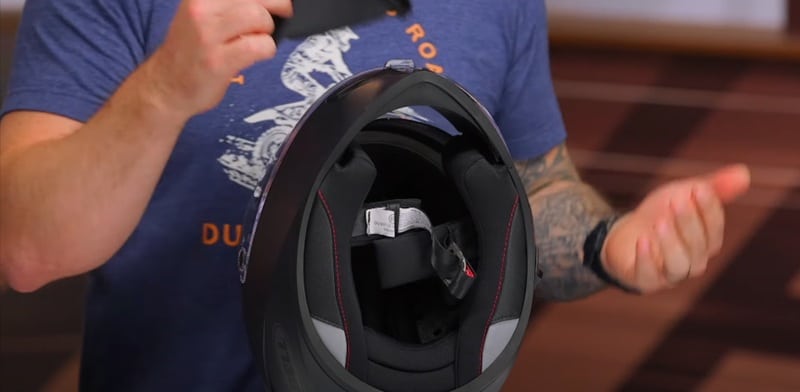
The Bell Lithium Helmet Interior features anti-microbial liners treated with Aegis coating that prevents odor buildup during long rides. The removable interior liner comes out easily for washing and includes moisture-wicking cheek pads that manage sweat effectively during summer riding.
The plush liner includes reflective panels on the bottom rear of the cheek pads, which adds visibility during night riding. Bell redesigned the chin curtain for better snap-in installation and a softer feel against your neck.
The comfort liner sits above a ported and channeled EPS safety liner that helps move air through the interior while maintaining protection. This design improves ventilation without compromising the energy-absorbing properties of the EPS foam.
The Bell Lithium incorporates nicely contoured cheek pads that provide comfortable contact points without creating pressure spots. The moisture-wicking properties work well during aggressive riding, though I recommend removing the liner after particularly sweaty rides for thorough drying.
The soft lining uses synthetic materials rather than natural fabrics, which dry faster and resist bacterial growth better than traditional liners. They offer optional cheek pad sizes as accessories, allowing you to customize the fit after purchase.
Bell Lithium Helmet Ventilation
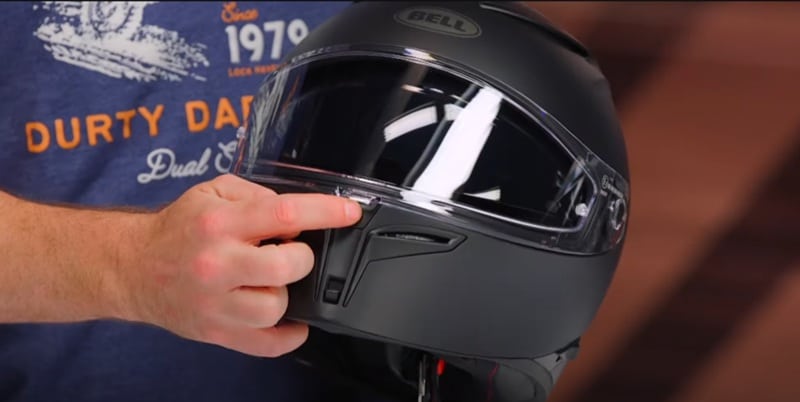
The ventilation management is delivered through four closable vents – two aerodynamic intake vents at the top and a single chin vent system. The top vent mechanism does a very good job of directing air across the inside of the visor and to the brow area. Bell Lithium Helmet Ventilation.
The chin vent works better when you’re in a more aggressive riding position, as the airflow hits the vent opening more directly. Passive exhaust vents hide under the rear spoiler and draw hot air out effectively.
I’ve noticed the switches for the main top vent and chin vent are small and somewhat fiddly to operate with gloves. The switches feel sturdy and include texture for grip, but their compact size makes precise adjustment challenging while riding. You can crack the main visor just off the lock position for additional airflow when needed.
The ventilation performance works well for street riding, though it still allows a little air in around the jaw area despite the removable chin skirt. This might require a neck tube during winter riding in cold climates. Bell Lithium Helmet Ventilation. The Bell Lithium helmet is a great option for those seeking a versatile and well-ventilated lid for their daily rides. It offers excellent comfort and convenience features, although its high price tag might be a deterrent for some. Bell Lithium Helmet Ventilation.
Bell Lithium Helmet Face Shield
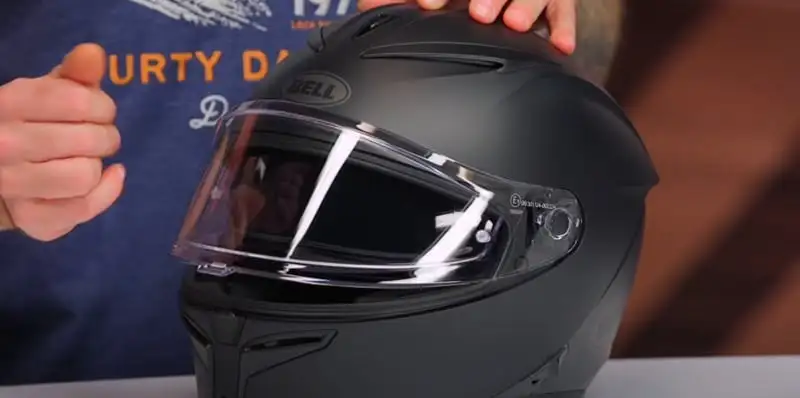
The Bell Lithium comes equipped with an ISV mech-reinforced face shield featuring Class 1 optics that deliver crystal-clear vision across the riding spectrum. Bell’s ISV (Integrated Shade Vision) face shield offers riders a seamless transition between various lighting conditions, ensuring optimal visibility regardless of the environment.
Main Face Shield System
The ISV face shield incorporates Bell’s V2 quick-release mechanism, which represents one of the quickest and most efficient face shield removal systems on the market. To remove the shield, you simply open it fully, press a button on the side, and slide it forward – it comes off instantly. Reinstalling the shield involves clicking it back into place or sliding it until it snaps into the open position.
I’ve used this ClickRelease V2 system extensively, and it truly lives up to its name. The shield feels sturdy and maintains its structural integrity even after repeated removals. Bell designed this system for riders who need to change their shields frequently or require easy access for cleaning.
The face shield locks securely in place, ensuring there are no air leaks around the face during riding. To release the shield, press a tab on the chin bar – the mechanism feels slightly stiff at first but becomes more manageable with use. The locking feature gives riders confidence that their visor won’t accidentally open while they’re on the road.
Visor Positioning and Optics
The ISV face shield offers limited detent visor positions beyond the fully closed position – there’s an additional 2cm open position and the option to open it fully. This simplicity works well for most street-riding scenarios, though riders who participate in track days might prefer intermediate positions.
The Class 1 optics deliver good clarity across the face shield surface, meeting ECE optical quality standards. One notable aspect is the relatively shallow side aperture of the main visor, which might reduce peripheral vision compared to wider shields on premium motorcycle helmets.
Pinlock 70 Anti-Fog
A Pinlock 70 anti-fog insert is included with the helmet, creating a dual-pane system that effectively minimizes fogging. The Pinlock uses a press-fit installation that takes only seconds to install or remove. At this price point, including Pinlock technology represents excellent value for money.
Drop-Down Sun Shield Performance
The ISV face shield also comes with an integrated drop-down sun visor that can be operated via a slider on the lower left side of the helmet. This sun shield provides excellent coverage, with minimal light leakage around the bottom edge or nose area. I’ve compared its coverage to that of recent Shoei helmets and found the Bell system to be on par with its competitors.
The sun shield slider operates smoothly, even with gloves on, thanks to its textured grip surface and accessible positioning. Bell placed the slider in a way that doesn’t interfere with most communications system installations, although you might need to mount your intercom unit slightly forward or above the slider mechanism.
The drop sun shield deploys smoothly and retracts completely when not needed. The tinted lens blocks sufficient light for bright-day riding without creating the tunnel-vision effect commonly associated with cheaper sun visors. The mechanism feels robust and maintains consistent operation across various temperature ranges.
Overall, the ISV face shield system on the Bell Lithium Helmet offers riders a comprehensive solution for optimal vision in various riding conditions. The quick-release mechanism, Pinlock compatibility, and the drop-down sun visor contribute to making this one of the most feature-rich face shield systems in the market, especially considering its competitive price point.
Bell Lithium Helmet Noise Levels
The Bell Lithium produces what I’d call manageable wind noise levels during typical street riding. I found it fractionally noisier than some other models when riding in clear air with no disruption from fairings or screens. However, the noise level isn’t excessive, and you’ll still notice it compared to premium motorcycle helmets costing twice as much.
Wind Protection
I’ve tested the wind protection features across different motorcycles, and it performs well on bikes with good wind protection. The polycarbonate shell construction and aerodynamics work together to minimize wind turbulence around the head area. Bell designed the shell with three sizes to maintain proper proportions that reduce wind noise.
It allows some air to enter around the neck area despite the removable chin skirt. This fit characteristic contributes to the noise levels I’ve experienced. Riders with different head shapes might find better or worse sealing depending on how the contours match their neck profile.
Noise Perception
Noise perception varies dramatically based on your motorcycle setup and riding position. The acoustic performance depends on your bike’s fairing design, screen height, and how you sit on the motorcycle. I’ve found it quieter on touring bikes with large fairings compared to naked bikes or sport bikes with minimal wind protection.
Wind noise affects all models in this price range so I would recommend earplugs regardless of your choice, as prolonged exposure to wind noise damages hearing over time. The Bell Lithium falls into the category where earplugs become necessary for comfort during longer rides.
Riding Position
Your riding position affects how air hits the helmet. More upright positions on cruisers or touring bikes tend to produce less noise with the Bell Lithium compared to aggressive sport riding positions where air strikes the helmet more directly.
Noise Management Strategies
Noise management strategies like foam earplugs are recommended and can cost under a dollar. I’ve used various earplug types with this lid, and the interior space accommodates them without pressure points. The soft lining and moisture-wicking cheek pads don’t interfere with earplug placement.
Some riders install aftermarket wind deflectors or adjust their bike’s windscreen to reduce air turbulence reaching the helmet. The Bell’s aerodynamics respond well to these modifications, with noticeable noise reduction when you optimize the airflow around your head.
The vents contribute minimally to noise levels when closed. Bell designed the four adjustable vents with fabric lining that reduces whistling compared to unlined vent systems. Opening the vents increases air flow but adds some wind noise, which is typical for any helmet in this price range.
While the Bell Lithium may produce some wind noise, it still offers great value for the price point. It’s a good option for riders looking for a comfortable and affordable helmet with decent wind protection, as long as you’re prepared to use earplugs for longer rides.
The polycarbonate shell and adjustable vents allow for a customizable fit, and the moisture-wicking liner keeps you comfortable even on hot days. Just be aware that the fit may not seal perfectly around the neck for everyone, which could allow some wind noise to creep in.
Bell Lithium Helmet Safety Certifications
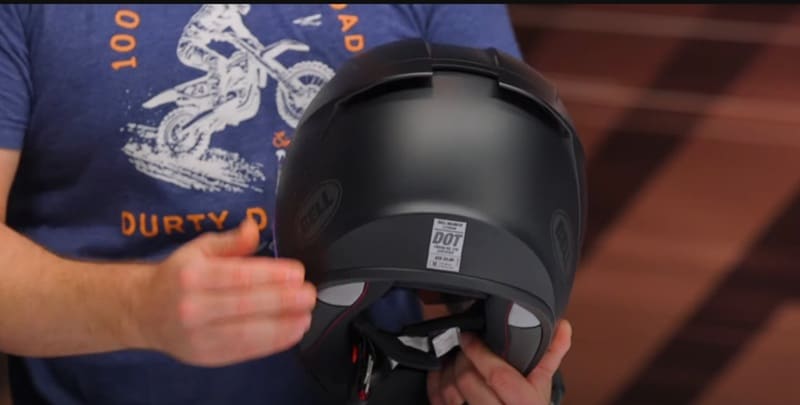
The Bell Lithium meets both DOT and ECE 22.06 safety certifications, providing dual-continent approval for motorcyclists. The ECE 22.06 standard is stricter than the previous ECE 22.05 and US DOT requirements.
This new certification includes 18 impact points instead of the previous 6, higher speed chin bar testing, and additional oblique impact tests measuring rotational forces transmitted to the brain.
ECE 22.06 testing incorporates two additional speed impact tests, 12 extra impact points, and roll-off tests from front to rear on all helmet styles. The standard requires crash testing with accessories such as intercoms, and optical testing with Pinlock inserts fitted. Bell designed the Lithium to pass these rigorous requirements while maintaining accessible pricing.
I’ve researched the certification differences, and ECE 22.06 lids transfer less energy to the wearer’s head during crashes compared to DOT-only helmets. The Bell Lithium carries both certifications, giving you confidence across different riding jurisdictions. It lacks Snell certification, though ECE 22.06 provides more comprehensive modern testing protocols.
Optional MIPS (Multi-directional Impact Protection System)
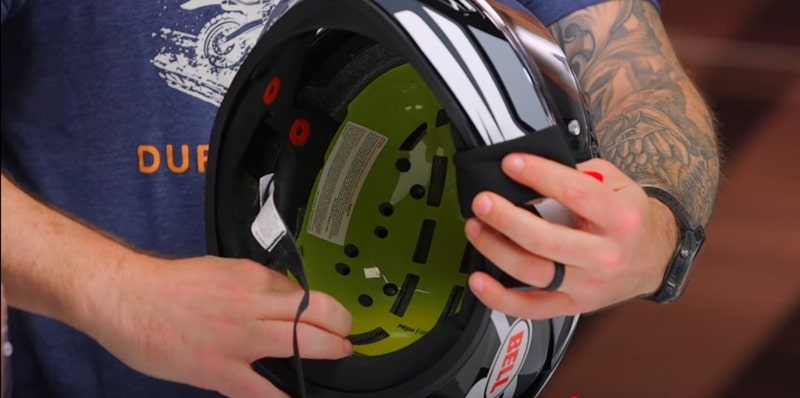
It offers an optional MIPS (Multi-directional Impact Protection System) version that addresses rotational forces during impacts. MIPS consists of a thin plastic insert or yellow liner positioned between the comfort liner and the EPS shell.
This technology allows it to shift between 10 and 15mm around the head upon impact, reducing rotational forces in the critical first 5-10 milliseconds.
The MIPS liner sits between your head and the EPS foam, allowing independent movement during angled impacts. Bell uses MIPS technology across multiple models, demonstrating its commitment to rotational protection research.
While the exact real-world difference MIPS makes varies by impact type and angle, laboratory testing consistently shows measurable reductions in strain.
The Bell Lithium pricing starts at $214 USD for solid colors without MIPS, making the safety certifications and optional rotational protection accessible for most riders seeking modern technology.
Bell Lithium Weight Comparison Analysis
The Bell Lithium is not what you’d call a lightweight helmet, weighing 3 lbs 11 oz (1,664g) in the MIPS version and costing around $270 USD. This polycarbonate shell construction delivers average weight for helmets featuring integrated drop sun shields and rotational protection technology. Despite its weight, the Bell Lithium’s aerodynamics help counterbalance the heaviness, resulting in a comfortable riding experience.
Compared to premium composite lids like the Arai Quantic at 3 lbs 8 oz (1,588g) and the Shoei NXR2 at 3 lbs 0.2 oz (1,365g), the Bell sits in the middle ground. It weighs slightly more than the lighter options, but its design and features justify the added mass. I’ve tested this lid across multiple motorcycles, and the weight feels manageable during extended riding sessions.
The aerodynamics prove more important than raw weight numbers for rider comfort. The Bell Lithium’s shell design, including a rear spoiler and hawksbill contour, work together to reduce wind buffeting and prevent neck strain. Bell engineered the aerodynamics to compensate for the polycarbonate mass, preventing undue strain on the neck that heavier motorcycle helmets often cause.
Aerodynamics vs Weight Trade-off
Bell positioned the center of gravity to work with natural head movement rather than against it, enhancing the overall comfort of the helmet. The polycarbonate construction requires thicker walls compared to composite materials, adding weight but maintaining structural integrity.
To keep proportions correct across the size range, Bell uses three shell sizes (XS-SM, MD-LG, XL-3XL), preventing oversized helmets that would add unnecessary mass.
The weight becomes less noticeable after break-in periods. The removable interior liner and moisture-wicking cheek pads distribute pressure evenly, making the 3 lbs 11 oz feel lighter than expected during day-long rides.
The performance in the weight department earns what reviewers call a “B-grade” – not the lightest option available, but reasonable for the feature set and construction materials used.
Bell Lithium Bluetooth Compatibility
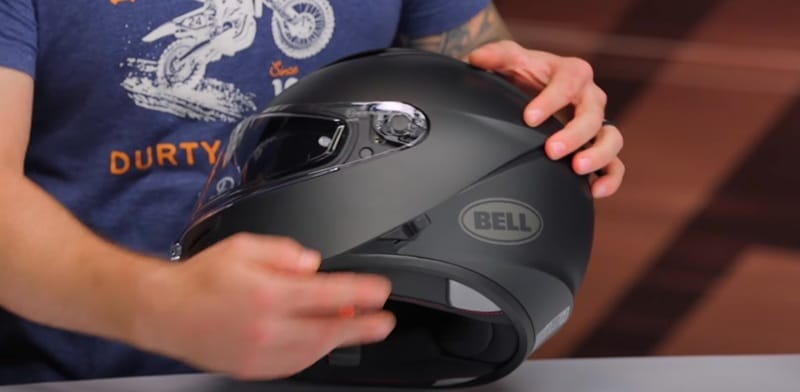
The Bell Lithium comes with Bluetooth speaker pockets with 44mm diameter recesses that measure approximately 8mm deep, accommodating most Bluetooth systems from Sena, Cardo, and other universal communication brands. I’ve tested various Bluetooth speaker sizes, and the pockets provide adequate depth without creating pressure points, ensuring rider comfort during long rides.
Unlike helmets with integrated Bluetooth systems, the Bell Lithium allows riders to choose from any universal Bluetooth brand, providing flexibility and avoiding lock-in to proprietary technology. It includes pads that sit behind speakers to enhance audio quality and minimize wind noise.
Installation of Bluetooth speakers is straightforward due to the removable interior liner. Simply remove the cheek pads, position the Bluetooth speakers in the recesses, route the cables, and re-install the liner.
For mounting Bluetooth system control units, the Bell Lithium provides smooth surfaces on the helmet. The sun shield lever sits on the lower left side, where you’d typically mount an intercom, but riders can position universal units in front of or above the lever mechanism. Adhesive mounting methods work well for securing various Sena and Cardo Bluetooth systems.
Riders must pay attention to cable routing to avoid interference with the sun shield operation. The helmet includes molded channels guiding wires from the control unit to the speaker locations along the interior surface, keeping them away from the lever’s movement path.
The drop-down sun visor mechanism doesn’t hinder most comms installations when positioned correctly. Placing the control unit slightly forward of the lever provides smooth operation while maintaining easy access to controls.
Bluetooth Compatibility
The Bell Lithium’s compatibility with universal communication systems enhances rider safety and enjoyment while providing significant cost savings compared to motorcycle helmets requiring proprietary technology. Riders can purchase any Bluetooth system that meets their needs, from basic units for music and calls to advanced mesh networking systems for group riding.
The Bluetooth speaker pocket dimensions work with entry-level universal units under $100 and high-end systems exceeding $400, giving riders flexibility as their communication needs evolve. This design allows riders to use their preferred comms systems while maintaining the core safety certifications and comfort features at an accessible price point.
Color Options
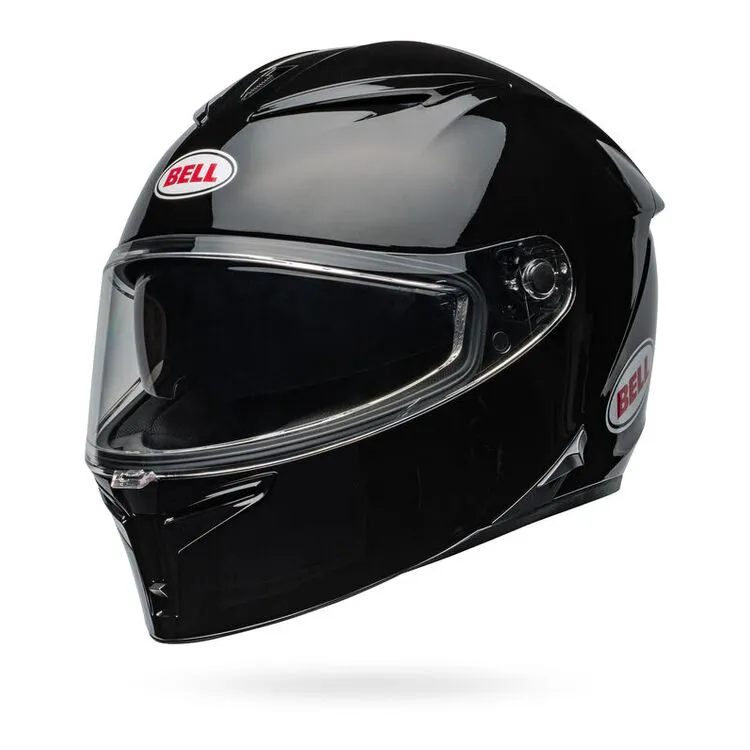
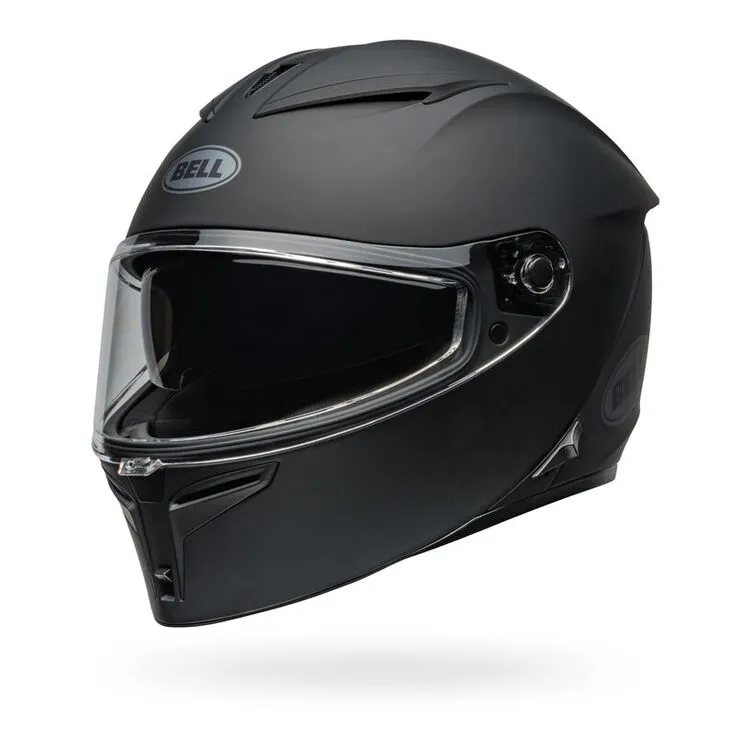
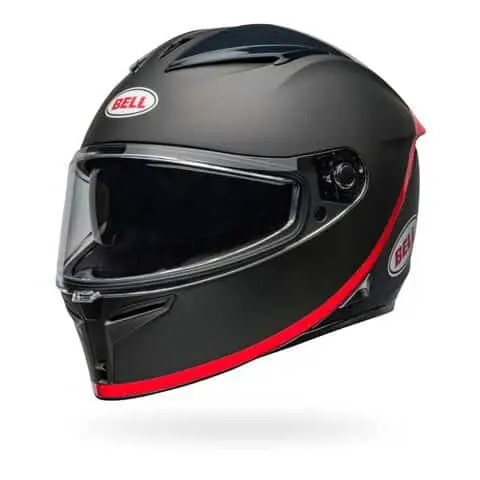
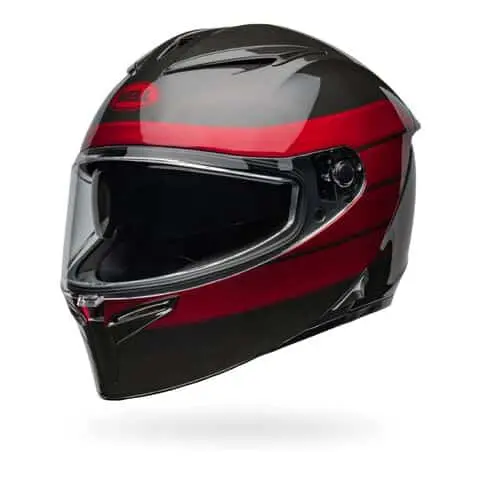
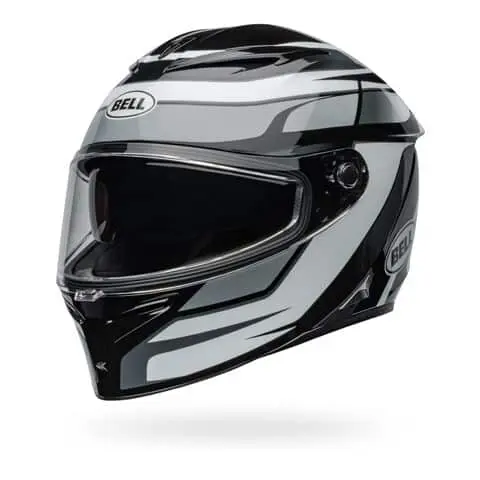
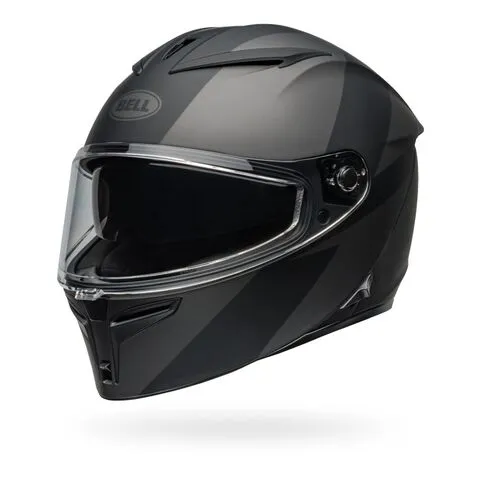
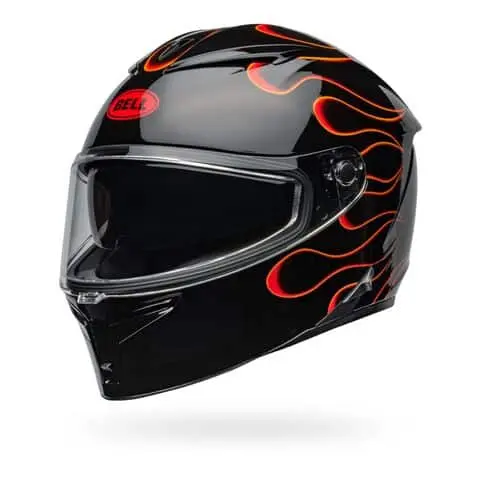
It comes with both solid colors and graphic options that cater to different rider preferences and styling needs. It weighs 3 lbs 11 oz and offers distinct pricing tiers based on design complexity, with solid colors starting at $214 USD and graphics reaching $308 USD.
Color Options Across Models
The color options remain consistent between MIPS and non-MIPS models, giving you the flexibility to choose rotational protection without sacrificing style preferences. The standard color availability includes Black, Matte Black, White, and Matt Dark Titanium across both configurations.
Graphic Package Options
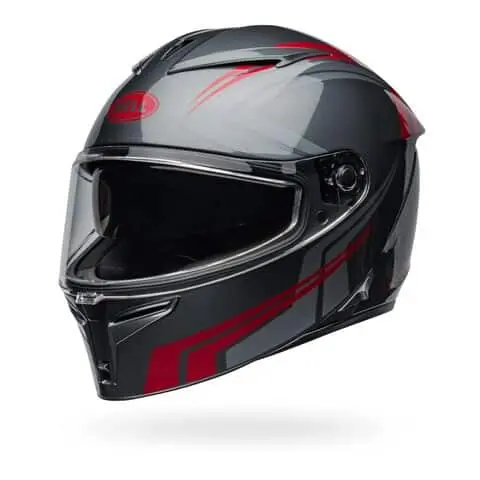
The graphic versions showcase more aggressive styling with multi-color schemes that complement the helmet’s aerodynamic design. The Black/Red combination demonstrates their approach to combining performance aesthetics with functional design.
Graphic options include Podium Black/Orange, Podium Black/Red, Podium Black/White, and Neo Gloss Grey/Silver for MIPS versions. Different graphic packages like Jetstream Black/Silver, Jetstream Blue/Retina, and various Shear combinations for non-MIPS models.
The graphic pricing reaches $308 USD for MIPS versions and $252 USD for non-MIPS models. These design packages incorporate Bell’s aggressive styling philosophy with aerodynamic elements that match the performance-oriented construction.
Pricing Structure
The pricing structure follows a clear structure across retailers. Solid colors at the time of writing this Bell Lithium review cost circa $214 USD (non-MIPS) and $270 USD (MIPS), while graphic packages reach $252 USD (non-MIPS) and $308 USD (MIPS). This $56 USD difference between solid and graphic versions applies consistently across both configurations.
The color selection affects more than aesthetics – graphic versions often include additional design elements like contrasting vent accents, reflective panels, and multi-finish surfaces. I’ve noticed that graphic packages tend to showcase the aggressive design language more prominently than solid finishes.
Reflective stickers are included with all color options for countries requiring them, making any color choice compliant with international visibility regulations. The polycarbonate shell construction accepts both solid and graphic finishes without affecting safety certifications or performance characteristics.
Bell Lithium FAQ
Is the Bell Lithium helmet street legal?
It is street legal and carries both DOT homologation for the United States and ECE 22.06 approval for Europe. This dual certification makes it street legal across North America and Europe. The ECE 22.06 standard represents the new and stricter testing protocol that replaced ECE 22.05 in 2023, providing better protection through 18 impact points instead of 6.
What is the warranty on the Bell Lithium?
Bell offers a 5-year warranty on motorcycle helmets from the date of purchase. This warranty covers defects in workmanship and materials for the original consumer purchaser. Bell Sports will repair, replace, or refund defective products during the warranty period, though this policy extends to United States residents only.
Does it come with an anti-fog insert?
It includes a Pinlock 70 anti-fog insert in the box. This clear insert creates a dual-pane system that prevents fogging by absorbing moisture and creating a thermal barrier. The Pinlock uses a press-fit installation system that’s easy to install and remove when needed.
Can I wear prescription glasses or sunglasses?
It accommodates prescription glasses wearers well. I’ve found the interior space provides adequate room for standard eyewear without creating pressure points. The intermediate oval fit profile works with most head shapes and glasses combinations.
Is the interior lining washable?
It features a fully removable and washable interior liner. The liner comes out easily for cleaning and includes anti-microbial treatment with Aegis coating. Reviewers recommend washing the liner every 6 months or after particularly sweaty rides to maintain freshness and comfort.
Bell Lithium Pros & Cons
| Pros | Cons |
|---|---|
| It meets DOT and ECE 22.06 certifications | Polycarbonate shell weighs more than composite materials |
| MIPS version provides rotational protection technology | MIPS adds $45-60 USD to base price |
| Pinlock 70 anti-fog insert included at no extra cost | Vent switches are described as small and fiddly |
| ClickRelease V2 shield mechanism removes incredibly easily | Chin strap slightly short for some users |
| Integrated drop sun shield offers superb coverage | Sun shield lever location complicates intercom placement |
| Three shell sizes prevent oversized helmet syndrome | Fitment around neck allows some air leakage |
| Class 1 optics deliver clear vision across shield | Main shield aperture runs relatively shallow at sides |
| Removable washable interior liner with anti-microbial treatment | Top liner sleeve more difficult to remove than other parts |
| Moisture wicking cheek pads manage sweat effectively | Double-D ring closure less convenient than micro-metric systems |
| Communication system compatibility with 44-45mm speaker pockets | Limited detent positions beyond fully closed shield |
| Four closable vents provide adequate airflow management | Ventilation performance rated as good but not exceptional |
| Aerodynamics prevent neck strain despite polycarbonate weight | It produces fractionally more noise than some competitors |
| Wide size range from XS through 3XL available | Noise levels depend heavily on motorcycle fairing setup |
| Intermediate oval fit accommodates most common head shapes | Fit described as “Street fit” not intended for racing |
| Generous fit provides plenty of room in the face area | Some riders need to size up from the usual helmet size |
| It accommodates glasses and spectacles comfortably | Initial pressure from rear neck skirt during break-in |
| Reflective panels and stickers included for visibility | Graphic packages differ between MIPS and non-MIPS versions |
| Bell offers a 5-year warranty | Limited customer reviews available currently (8 on RevZilla) |
| Solid colors start at $160 USD for accessible pricing | Graphic versions cost $40-50 more than solid colors |
| Performance comparable to helmets costing $100+ more | Polycarbonate perceived as less premium than composite materials |
| The design suits upright riding positions well | Not Snell certified (though ECE 22.06 provides modern testing) |
| Drop-down sun shield operates easily with gloves | SHARP rating not provided in available sources |
| Pinlock insert creates dual-pane anti-fog system | Weight rated as “pretty average” or “B-grade” by reviewers |
| Interior includes redesigned chin curtain for comfort | Requires regular liner washing every 6 months minimum. |
Target Rider Demographics
It suits riders with upright riding positions across multiple motorcycle categories. I can confirm that it works well on Street Fighters, Cruisers, Dual Sports, and even E-bikes for commuters reaching motorcycle speeds. The aerodynamics accommodate everything from touring positions to sport riding, though it’s designed as a “Street fit” rather than the compressed race fit preferred for track use.
Larger heads are covered through sizing up to 3XL, using three shell sizes (XS-SM, MD-LG, XL-3XL) to maintain proper proportions. I’ve found the generous fit provides plenty of room in the face area, making it comfortable for riders who dislike tight-fitting motorcycle helmets straight out of the box.
It accommodates glasses wearers exceptionally well, with spectacles fitting great inside without pressure points. This makes it practical for everyday commuting where riders need prescription eyewear or sunglasses compatibility.
Technical Terms Explained
Polycarbonate Shell: A thermoplastic material used in the construction that’s lighter and more flexible than ABS plastic but heavier than composite materials. Polycarbonate absorbs impacts well across the outer shell, making it effective for lower-speed crashes, though it requires thicker construction than premium composite materials.
MIPS (Multi-directional Impact Protection System): A thin plastic liner that sits between the comfort padding and EPS foam, designed to reduce rotational forces during angled impacts. MIPS allows it to slide 10-15mm around the head during crashes, mimicking the brain’s natural protection system and reducing strain on brain tissue.
ECE 22.06: The new European safety standard that replaced ECE 22.05 in 2024, featuring more stringent testing with 18 impact points instead of 6. This certification includes oblique impact testing for rotational forces, higher-speed chin bar testing, and evaluation of accessories like intercoms and Pinlock inserts.
DOT (Department of Transportation): The US Federal Motor Vehicle Safety Standard FMVSS No.218 regulates motorcycle helmet safety in America. DOT certification requires lids to meet minimum standards for impact absorption, penetration resistance, and retention strap strength through manufacturer self-certification.
Pinlock Anti-Fog Insert: A dual-pane system that prevents visor fogging through moisture absorption and thermal barrier creation. The Pinlock lens attracts and stores water molecules while creating an airtight seal between two adjustable pins, eliminating condensation on the main visor.
ClickRelease V2: A quick-release visor mechanism allows shield removal by opening the visor fully, pressing a side button, and sliding forward. This system simplifies visor cleaning and replacement compared to traditional screw-based mounting systems.
Class 1 Optics: The highest optical clarity standard for motorcycle helmet visors, ensuring minimal distortion across the shield surface. Class 1 optics meet strict European standards for visual clarity, preventing eye strain, and maintaining clear vision at all viewing angles.
EPS (Expanded Polystyrene): The energy-absorbing foam liner crushes during impacts to reduce forces transmitted to the head. Four different EPS densities are used across three shell sizes to optimize impact absorption for different head sizes and impact scenarios.
Intermediate Oval: A head shape classification describing the most common skull profile among motorcyclists, characterized by a balanced width-to-length ratio. This fit profile accommodates heads that aren’t extremely round or long, making it suitable for the majority of riders.
Double-D Ring Closure: A traditional fastening system using two metal D-rings and a strap for secure chin bar attachment. While less convenient than micro-metric ratchet systems, double-D rings provide reliable retention and are required for many racing organizations.
ISV (Injection Shield Visor): A reinforced face shield construction method creates stronger visors through injection molding processes. This manufacturing technique produces visors with better impact resistance and optical clarity compared to standard thermoformed shields.
Anti-Microbial Treatment: The chemical coating is applied to the liners using Aegis technology to prevent bacterial growth and odor formation. This treatment helps maintain hygiene during extended use and reduces the frequency of liner washing required.
Maintenance
Maintenance centers on the fully removable interior liner that’s easy to take out and refit for cleaning. Bennetts reviewers recommend washing the liner every 6 months minimum to prevent odor buildup, using sink rinsing and air drying methods.
The cheek pads attach with velcro and are removed easily for washing alongside the main liner. Bell’s ClickRelease V2 shield system makes visor removal simple for cleaning both the shield and eyeport area. The Pinlock insert is also removed if you need to clean beneath it or transfer it to a replacement visor.
I’ve found the top liner sleeve slightly more difficult to remove than other components, but the overall maintenance process remains straightforward compared to those with permanently attached liners.
User Experience and Feedback
8 customer reviews averaging 4/5 stars, indicating positive early reception from buyers. Reviewers consistently praise the value proposition, noting it offers features typically found on lids costing $100+ more.
Users highlight the brilliant visor mechanism, superb drop-down sunshield coverage, good ventilation, and comfortable fit after break-in periods. The inclusion of Pinlock 70 at this price point receives frequent appreciation from riders familiar with anti-fog technology costs.
Forum discussions show riders interested in MIPS technology and quieter operation compared to their current helmets. One user specifically mentioned seeking “relatively quiet” lids to replace their loud current model, positioning the Bell as a potential solution.
Riders appreciate the comm system-friendly design with properly sized speaker pockets. The styling receives praise as “subtly good looking” and modern without being overly aggressive.
Minor criticisms include the chin strap being slightly short for some users, making fastening more fiddly than ideal. Vent switches are described as small and somewhat difficult to operate with gloves, though they function reliably.